Oklahoma's long stretch of historic Route 66 links prairie towns, older city streets and roadside landmarks that were made for travelers willing to slow down. The route's story is more than a collection of signs: it includes working businesses, restored buildings and communities adapting as traffic moved elsewhere.
These seven stops run roughly from northeast to west. They are spread across a large state, so choose a manageable section or make an overnight trip of it. Historic alignments changed over time; use a current map, follow road signs and check each destination's hours before leaving.
1. Blue Whale of Catoosa
A giant blue whale beside a pond is one of Oklahoma's most recognizable roadside sights. Oklahoma Tourism describes it as the creation of Hugh Davis, who built the concrete structure with help from Harold Thomas in the early 1970s. Today it is a place for a picnic and a look at an especially playful piece of Route 66 history.
The state tourism listing says admission is free and the site is generally open during daylight hours. Swimming is not allowed in the pond. Check current facilities and rules before visiting, and keep children close around the water.
2. Vickery Phillips 66 Station, Tulsa
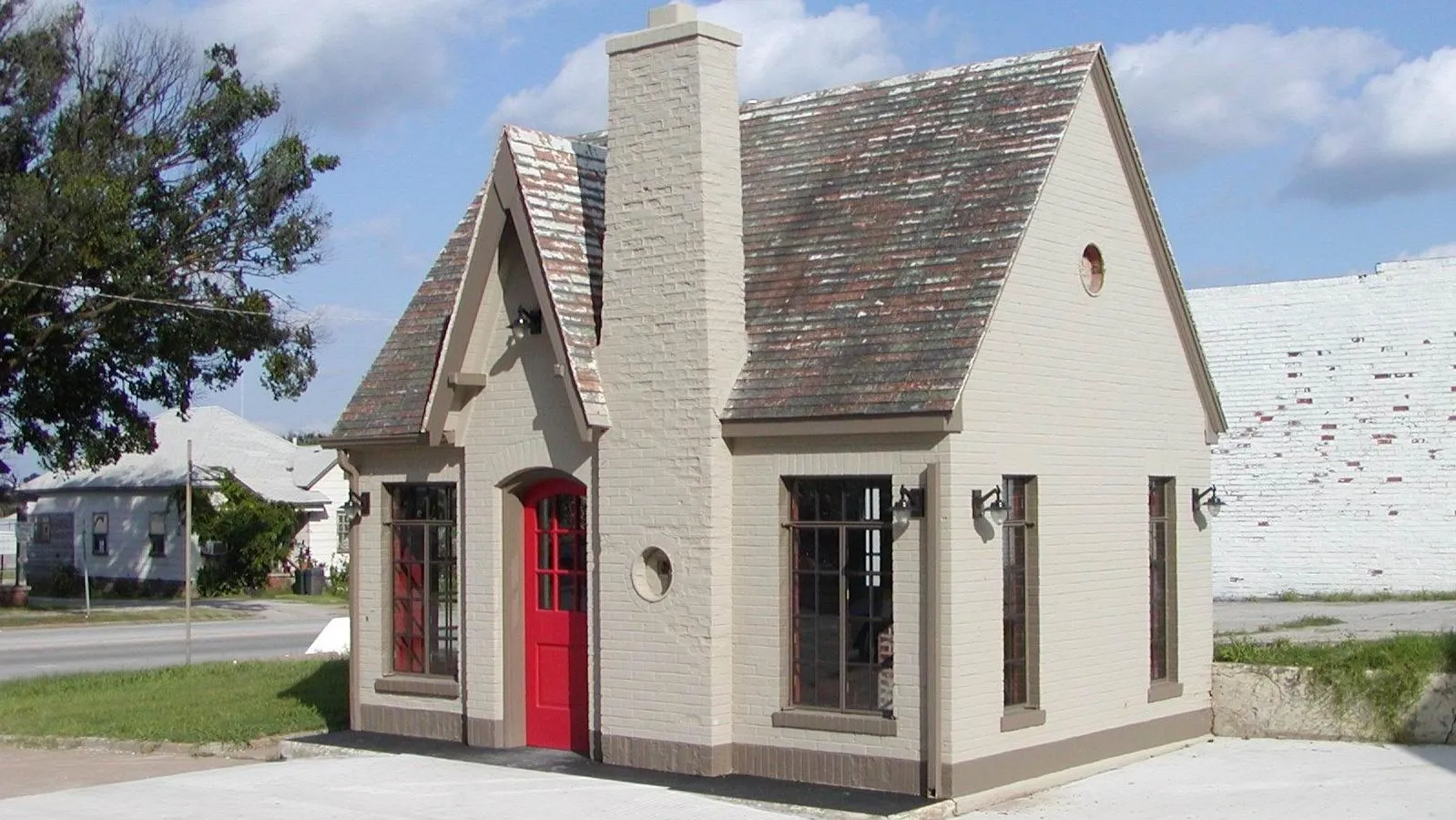
In Tulsa, look for the cottage-style Vickery Phillips 66 Station at Sixth and Elgin. The National Park Service says the station was built in 1931 and later took the name of operator V. W. Vickery. Its deliberately domestic design contrasts with the standardized roadside facilities many drivers know today.
The building's restoration benefited from the NPS Route 66 Corridor Preservation Program. It has served later commercial uses, so treat it as an active property: check its present status and view it from permitted public areas. The station is an example of how a practical stop for fuel can become an architectural record of travel.
3. Rock Creek Bridge near Sapulpa
Bridge #18 at Rock Creek is a steel Parker through-truss bridge built in 1924, before the Route 66 designation. According to the NPS, it carried the Ozark Trail and later became part of Route 66; its brick deck is an unusual surviving detail. The old road alignment provides a tangible reminder that the famous highway was assembled from earlier routes.
Bridge access and construction can change. Verify current local conditions, obey closures and do not assume you can drive across. If viewing is permitted, use a safe legal stopping place and be considerate of traffic and nearby residents.
4. Rock Cafe, Stroud
Stroud's Rock Cafe is one of the Route 66 properties recognized by the National Park Service's preservation program. A meal stop can make a road trip feel less like a checklist and more like time spent in the towns the highway connected.
Check the restaurant's own current hours and menu before planning around it. Allow extra time for a relaxed stop, and remember that small businesses may change schedules around holidays or special events. If it is closed, explore other locally operated options rather than letting a single stop decide the day.
5. Arcadia Round Barn
The red Round Barn predates Route 66 by decades. Built in 1898 by William Harrison Odor, it served agricultural uses and became a community gathering place; dances were held in its upper level. Once the highway reached Arcadia in 1928, the unusual shape became a landmark for passing drivers.
Volunteers helped restore the barn after its roof collapsed, and the building reopened in 1992. Oklahoma Tourism lists exhibits and a gift shop inside. Verify hours and any event closures before arriving, then look closely at the structure as well as its round outline: its rafters and community history explain why people worked to preserve it.
6. Oklahoma Route 66 Museum, Clinton
The Oklahoma Route 66 Museum in Clinton offers a chance to put individual roadside stops into a larger historical story. Oklahoma Tourism describes exhibits of antiques and nostalgic displays about the Mother Road. A museum stop is particularly useful when weather makes a long outdoor itinerary less appealing.
Check the museum's current admission, opening days and holiday schedule before setting out. Pair it with time in Clinton rather than trying to see the entire state's route in one day. Route 66 businesses and communities changed as the road was realigned and interstate travel grew; that larger context makes the surviving landmarks more interesting.
7. The former Y Service Station and Café, Clinton
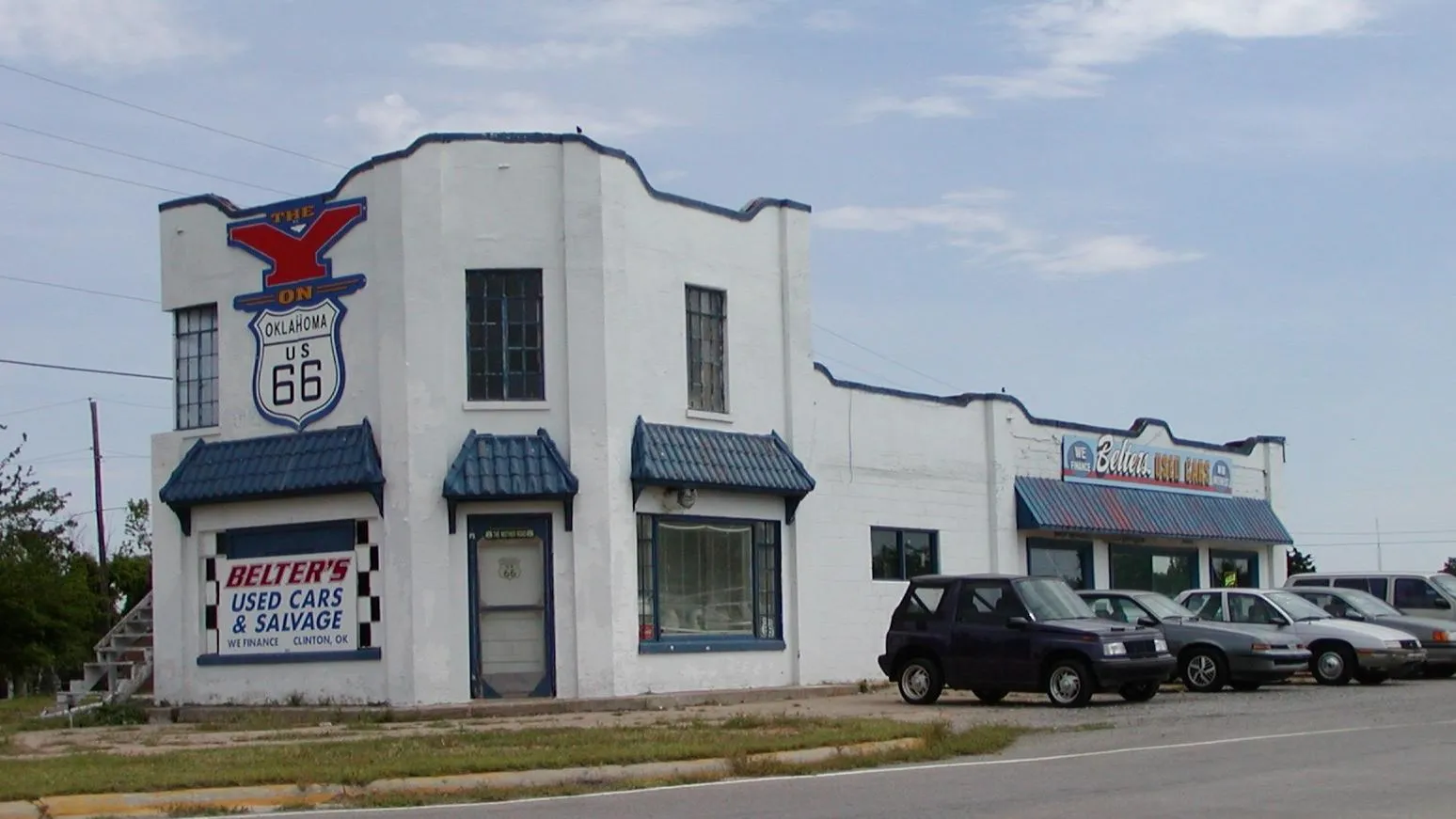
The former Y Service Station and Café once stood at a fork where Route 66 and U.S. 183 divided. Built in 1937, it combined fuel, food, repairs and lodging in one roadside business. The NPS explains that a later highway realignment bypassed it, illustrating how a change in traffic could reshape a business almost overnight.
The NPS has documented later commercial use of the property. Look from public space and respect the current occupants; historic listing does not guarantee a public tour. Before continuing west, check fuel and road conditions, then decide which stretch of the old road deserves the next unhurried day.