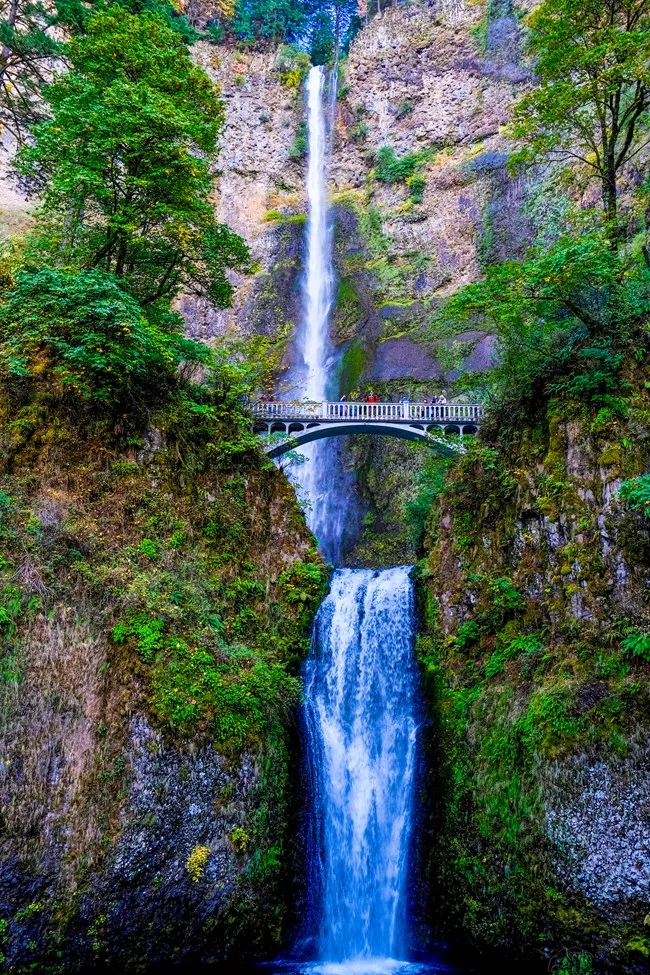
Multnomah Falls drops in two dramatic tiers in the Columbia River Gorge, with historic Benson Bridge crossing between them. The waterfall is one of Oregon’s best-known stops, and its proximity to Portland makes it easy to underestimate how busy the area can become.
Planning transportation, checking current restrictions and leaving time for the surrounding landscape can make a short visit much more enjoyable. These six tips will help you prepare.
1. Decide how you will arrive
The Oregon Department of Transportation recommends transit, a shuttle or a tour as reliable ways to avoid congestion. Columbia Area Transit’s Columbia Gorge Express serves Portland’s Gateway Transit Center, Multnomah Falls, Cascade Locks and Hood River. Check the operator’s current schedule and ticket information before making connections.
If driving, the I-84 Exit 31 lot provides access to the falls. The small lot on the Historic Columbia River Highway has limited space and a separate parking operation. Parking along the highway shoulder is prohibited; improperly parked vehicles may be ticketed or towed.
Construction on the historic highway and changing traffic conditions can affect access. Consult ODOT and TripCheck before departure, and have an alternative plan if the lot is full. Do not stop on the interstate or attempt an unsafe turn to reach a parking space.
2. Check seasonal timed-entry rules
The I-84 Exit 31 lot has used a timed-use permit system during the summer peak. ODOT says the 2026 season ended and that information about 2027 permits will be posted by the agency and Recreation.gov. Requirements may change, so check the official page for your date rather than assuming last year’s rules still apply.
A parking permit is not the same thing as a guarantee of an empty lot or a reservation for a restaurant. Read the conditions carefully, arrive within the assigned window if applicable and follow signs and staff instructions. Transit or an organized shuttle may have different requirements.
Outside the permit season, parking can still be crowded. A weekday or an earlier visit may offer more flexibility, though weather and road conditions matter in every season.
3. Take time at the lower viewpoint
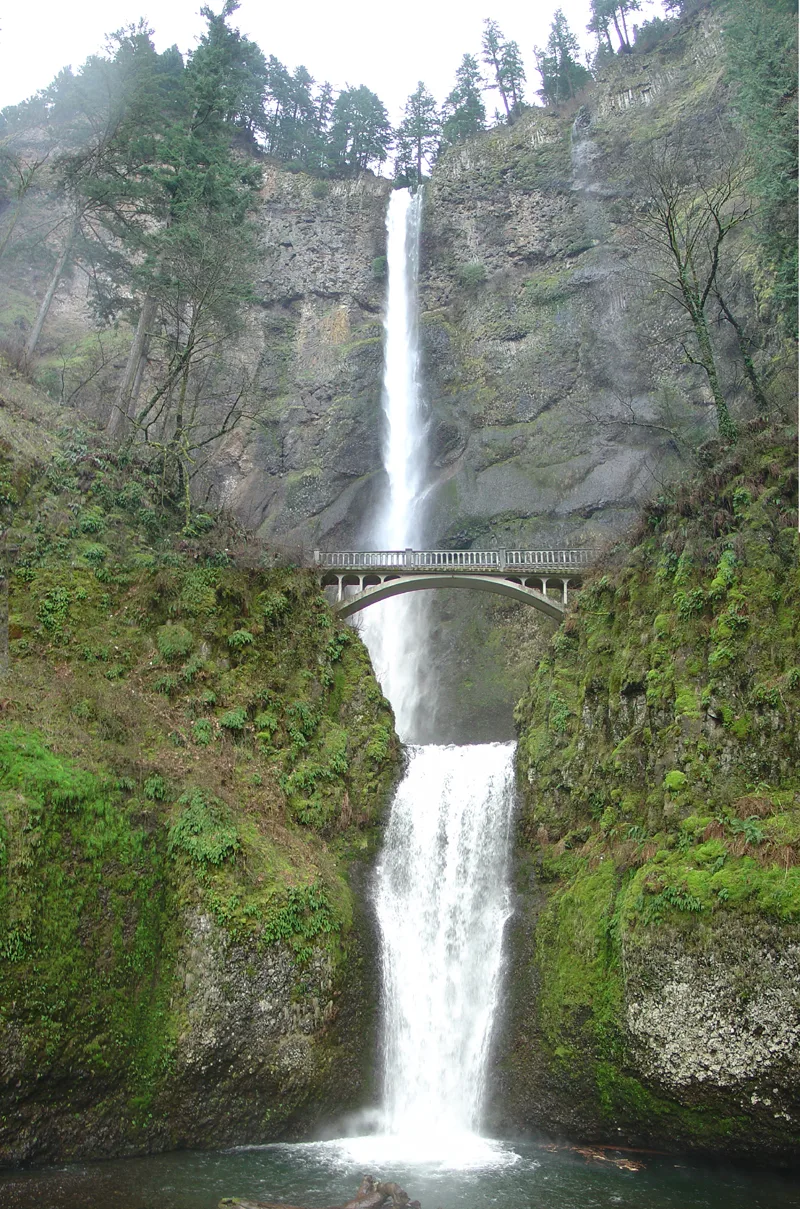
The falls drop a total of about 620 feet, including the upper and lower cascades. Water is supplied by springs and runoff from Larch Mountain, so the falls flow throughout the year, though volume and appearance vary with rain and snowmelt.
The lower viewing area provides a close view of both tiers and Benson Bridge. Expect mist and wet pavement, especially during rainy weather. Wear shoes with traction, share the space and keep children away from barriers and the water.
The basalt cliffs are part of the Columbia River Basalt Group. Pause to notice the layers and vegetation around the cascade, but stay in designated areas. A view is never worth climbing a railing or entering a closed area.
4. Visit the bridge and trail only when open
Benson Bridge, built in 1914, spans the lower part of the falls. The path above the lodge provides another perspective, but it climbs and can be slippery. Check Forest Service notices for current trail or bridge closures, especially after storms, ice or rockfall.
If you continue on a longer hike, choose a route for the whole group and bring water, layers and a current map. The gorge’s steep slopes and wet conditions make sturdy footwear important. Turn back when the route is closed or conditions exceed your experience.
Accessibility varies between the lower viewing area, bridge path and higher trails. Contact the Forest Service or visitor information center for current details if grades, stairs or pavement conditions are important for your party.
5. Notice the historic lodge
Multnomah Falls Lodge opened in 1925 and is part of the site’s long history as a destination along the Columbia River Gorge. The lodge houses visitor services, including a restaurant and information center; check current hours and construction notices before counting on a particular service.
The gorge has a much longer human history than the highway or lodge. Indigenous communities continue to have relationships with the Columbia River and its landscapes. Give yourself time to read interpretation and learn about the region rather than treating the waterfall as an isolated photo stop.
6. Leave room for the rest of the gorge
The Columbia River Gorge National Scenic Area spans both sides of the river and includes many communities, trails and viewpoints. Choose an additional stop only after checking its access and current conditions. A short list with a realistic travel window is easier to enjoy than a rushed attempt to visit every waterfall.
Support local businesses in nearby communities, carry out litter and respect private property and closed trails. Weather, congestion and construction can change the day, so keep your return trip flexible and check current travel information before you leave.