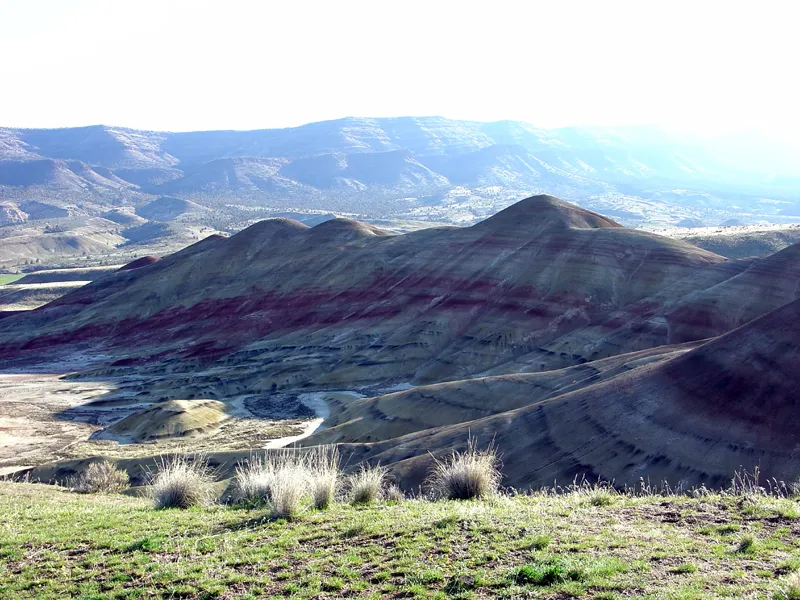
The Painted Hills are a landscape of red, gold, tan and dark bands in central Oregon. Their colors come from ancient layers of soil and sediment, and they can look different as light, moisture and weather change. Five short trails offer different ways to appreciate the area without walking on the fragile hills themselves.
The Painted Hills Unit is one of three geographically separate units of John Day Fossil Beds National Monument, near the town of Mitchell. Check current conditions before driving and allow more time than the trail distances alone suggest. The National Park Service asks visitors to stay on designated routes and “Don’t Hurt the Dirt.”
1. Painted Hills Overlook Trail
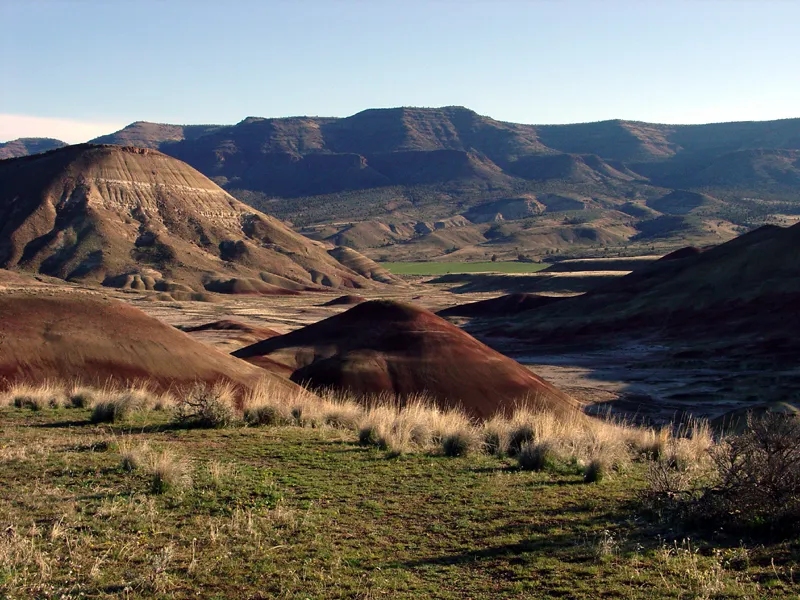
The half-mile round-trip Overlook Trail is a natural starting point for a first visit. It provides broad views of the colorful hills and the landscape around them, with enough room to pause and notice how the bands change across the slopes.
The colors are records of ancient environments, not paint or loose decorative sand. The U.S. Geological Survey explains that some red layers represent ancient soils, while darker layers include carbonized plant material. Rain and shifting light can change the apparent shades from one visit to another.
Stay on the trail and use designated viewpoints. A single footprint can scar the fragile surface and damage scientific resources. The safest and most respectful photograph is taken from an established route, even if the hills look inviting from a few steps away.
2. Carroll Rim Trail
For a higher perspective, the NPS lists Carroll Rim as a 1.6-mile round-trip trail with a climb above the overlook area. The route demands more effort than the shortest walks in the unit, but it gives a broader view of the Painted Hills and surrounding high desert.
Bring water, sun protection and sturdy footwear, and assess the weather before starting. Heat, wind and slippery conditions can make the exposed route more demanding than its mileage suggests. Take breaks and turn back if anyone in the group is uncomfortable with the climb or footing.
From above, the colored hills and more resistant rock of the surrounding ridges reveal a layered landscape. Use the park’s interpretation to understand what you see; avoid stepping off the route to reach an unofficial viewpoint.
3. Painted Cove Trail
The Painted Cove Trail is about a quarter mile and includes a boardwalk through a particularly colorful area. Its short length makes it a useful choice when time or energy is limited. Check the current accessibility information and conditions before visiting, since surfaces and facilities can change.
The boardwalk protects the delicate ground as well as providing a close view. Remain on it and do not climb the slopes, touch fragile formations or leave objects behind. Small acts of restraint help preserve the patterns for scientific study and future visitors.
Light can alter the scene dramatically. A cloudy or damp day may bring different tones from a bright afternoon; there is no need to force a particular photograph. Take time to look at the layers and texture without blocking the route for others.
4. Leaf Hill Trail
The quarter-mile Leaf Hill Trail introduces the fossil record associated with this area. Fossil leaves help researchers reconstruct ancient plants and climates, connecting the colorful landscape to a world very different from today’s semi-arid hills.
Read the signs and resist the urge to search off trail. Collecting fossils or other natural objects is prohibited in the monument. Even a small fragment can carry valuable scientific information when it remains in its original context.
If you want to explore the broader fossil story, the Thomas Condon Visitor Center is in the separate Sheep Rock Unit, not at the Painted Hills. Check its hours and the driving distance before adding it to the same day; the monument’s units are separated by considerable stretches of road.
5. Red Scar Knoll Trail
The NPS lists Red Scar Knoll as another quarter-mile trail. Road signs call it Red Hill, so use the official map and follow the posted directions along Bear Creek Road. Its short distance makes it a useful final stop if conditions and time permit.
Roads in the unit include dirt and gravel. The park does not recommend large RVs or travel trailers beyond the Painted Hills Overlook, so consider your vehicle before continuing. Rain can change road and trail conditions; check current alerts and turn around if a road becomes unsafe.
Bring drinking water and supplies from town, carry out litter and leave plants, rocks and fossils in place. Cell service can be unreliable, so download directions before traveling. A slow visit to a few open trails is more rewarding than rushing across all five.