Bryce Canyon’s famous hoodoos fill a series of amphitheaters along a high southern Utah plateau. The orange, red and pale stone looks different with each change of light, while snow can transform the same viewpoints in winter.
The park’s elevation, weather and seasonal shuttle schedule make planning worthwhile. These six tips will help you enjoy the rim, choose a trail and understand the landscape without rushing.
1. Begin with the amphitheater viewpoints
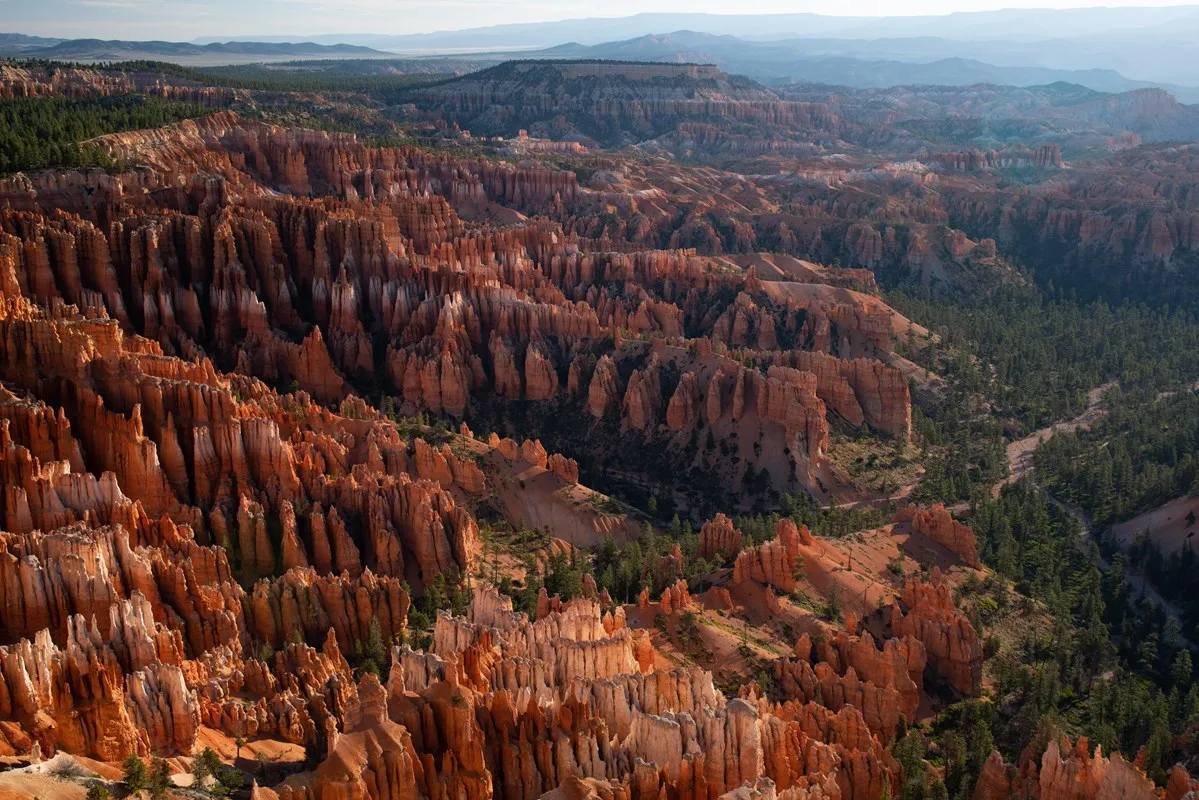
Sunrise, Sunset, Inspiration and Bryce Points overlook the park’s best-known amphitheater. They sit within the first few miles of the park road, making them a practical starting point for a first visit. Each offers a different angle on the hoodoos and the forested plateau beyond.
Allow time to stop and look rather than trying to reach every viewpoint at a single dramatic moment. Changing clouds and shadows reveal different textures throughout the day. Stay behind barriers and keep children close near steep edges.
The park sits at high elevation, with some viewpoints around 8,000 feet or higher. Walk at a comfortable pace, drink water and bring layers. A sunny forecast at a lower-elevation town can conceal wind, cold or snow at the rim.
2. Consider the seasonal shuttle
Bryce Canyon’s shuttle serves the amphitheater area during its operating season and is free with park admission. Unlike Zion Canyon’s shuttle, it is not mandatory. The NPS recommends boarding at the shuttle station in Bryce Canyon City or the visitor center to reduce parking congestion.
The 2026 shuttle season ended in October; the park says the 2027 season will begin in April. Check the current timetable and final departure times before relying on it. Large vehicles face parking restrictions at some popular areas during shuttle hours.
The shuttle can make a one-way walk along an open section of the Rim Trail convenient. If driving instead, use designated parking and avoid stopping in traffic. Busy lots may require patience or a change in the order of your stops.
3. Pick a trail for the weather and your group
Rim walks provide views from above, while trails descending into the amphitheater offer a closer look at the rock spires. The return from below the rim is uphill, so choose a route for the climb back as well as the descent. Ask a ranger about current closures, ice and trail conditions before setting out.
The Navajo Loop has two sides. The NPS says the Wall Street side closes in winter, while the Two Bridges side is generally open year-round when conditions allow. Confirm the day’s status; ice, storms or maintenance can change what is safe and open.
Carry water, sun protection and suitable footwear. In winter, traction devices may be needed on icy trails; in summer, thunderstorms and lightning require attention. Turn back if conditions or the group’s energy make the return uncertain.
4. Learn how hoodoos form
Hoodoos are irregular rock spires shaped as erosion acts on layers of different hardness. Freeze-and-thaw cycles and water help break rock apart, gradually changing the amphitheater. The process is ongoing, so remain on trails and away from unstable edges.
The park preserves a landscape with long Indigenous connections as well as geological history. Visitor-center exhibits and ranger programs can provide context beyond the viewpoint. Leave rocks, plants and cultural materials in place and do not add marks to stone.
5. Prepare for a real winter season
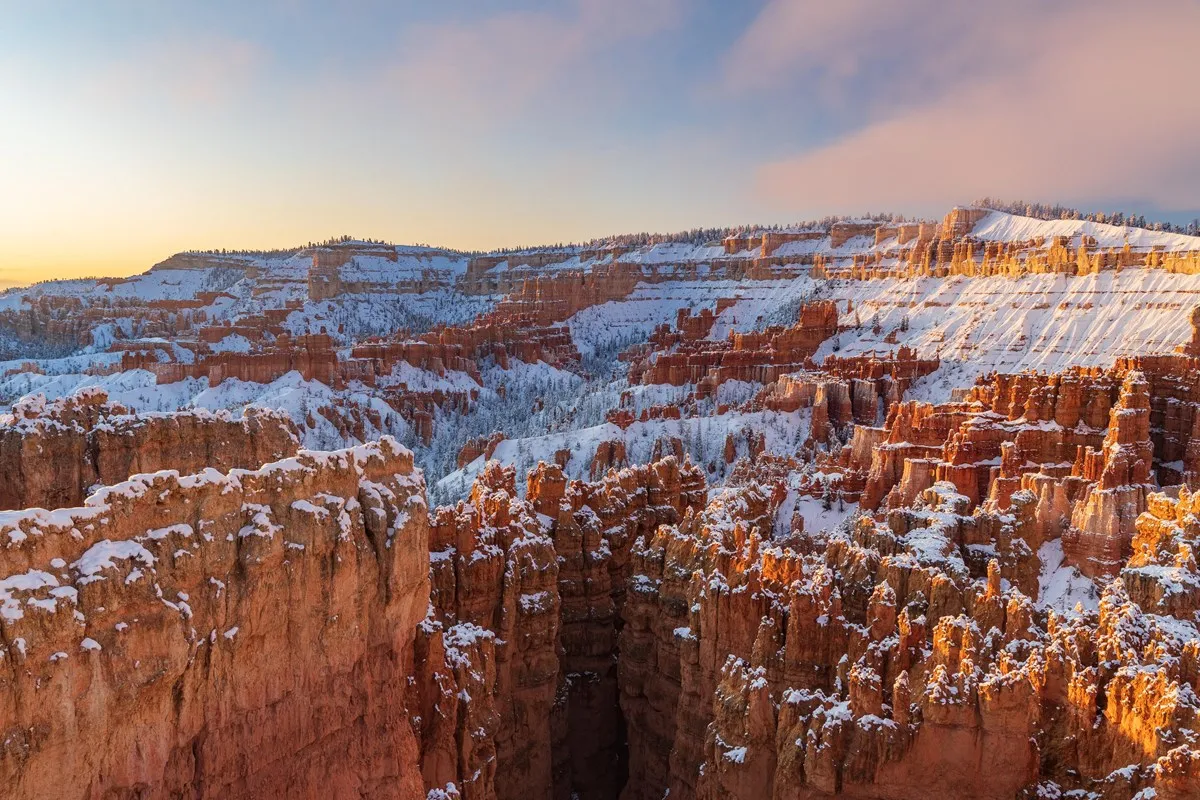
Snow can arrive early and linger late at Bryce Canyon. The contrast between white snow and red stone can be beautiful, but roads and trails may be icy and some routes close seasonally. Check the forecast and current NPS conditions before driving, and carry equipment suited to winter travel.
Snow can conceal the edge of the rim or create unstable overhangs. Stay behind barriers, avoid approaching drop-offs and supervise children. Shorter daylight also makes it important to begin early enough to finish safely.
In summer, the plateau can still be cool in the morning and hot on exposed trails later. Layers, water and a willingness to change plans are useful in every season.
6. Leave time beyond the busiest overlooks
The park’s southern scenic drive reaches additional viewpoints at higher elevations when the road is open. Check road status, fuel and weather before heading farther from the visitor center. The shuttle does not serve every area, and services are limited along the drive.
Bryce Canyon’s dark skies are another reason some visitors stay into the evening. Ask about ranger programs and current access, dress warmly and use a light carefully on paths. Leave enough time and energy for the drive back to your lodging.
Before departing, review NPS alerts, the forecast and the shuttle schedule. A flexible visit gives you time to appreciate the changing light and the fragile landscape.