Capitol Reef rewards a traveler who pauses. The cliffs and tilted rock layers are compelling from the road, but the Fruita district adds a different rhythm: an old farmstead, orchards, stories that reach back thousands of years, and trails into narrow canyons. Here is how to put together a first visit without treating the park as a blur between other stops.
1. Begin with context at Fruita
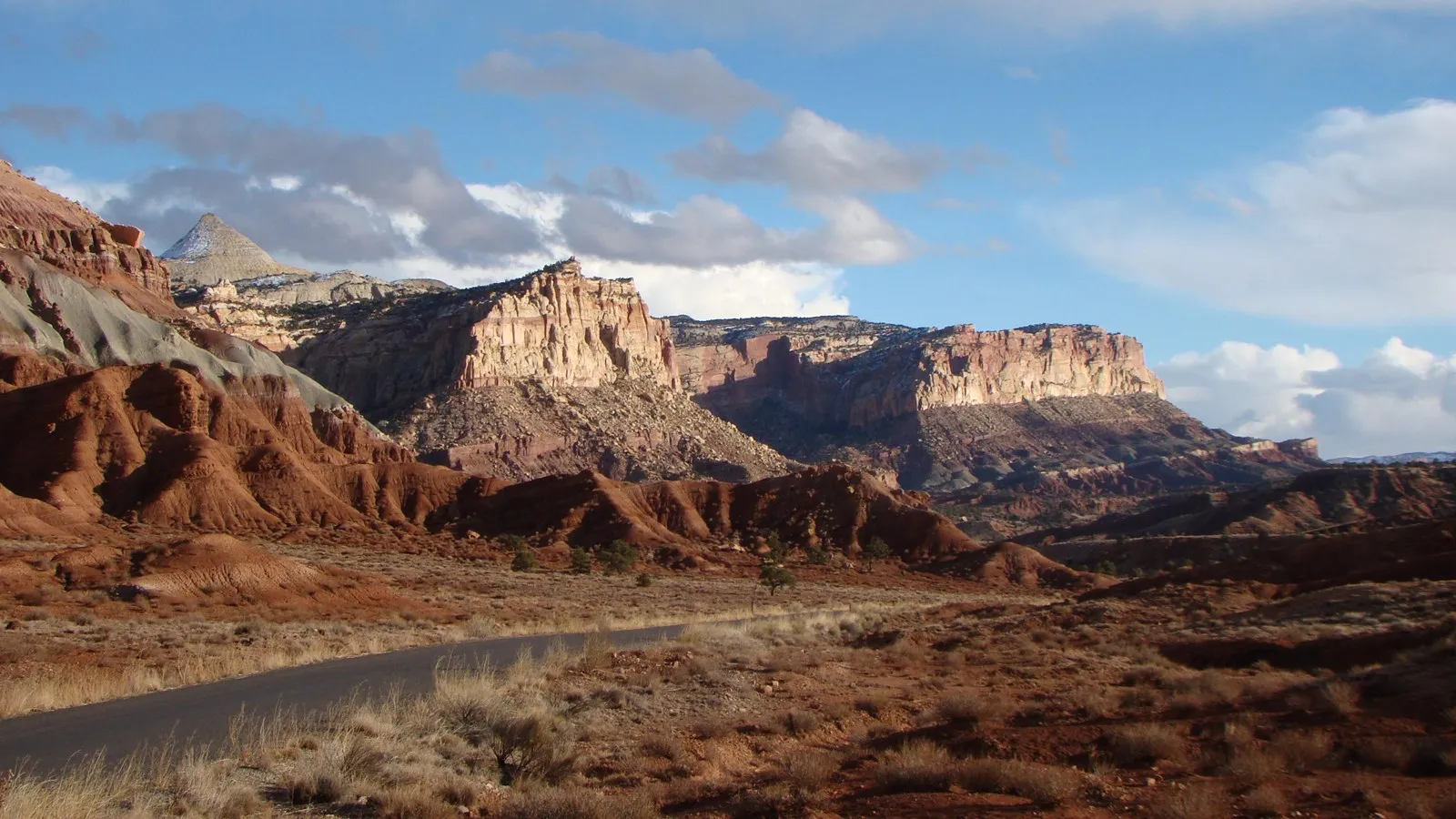
The visitor center near Utah Highway 24 is a useful first stop for maps, current weather and road information. Fruita sits in the Fremont River valley amid the rock formations of the Waterpocket Fold, a long wrinkle in the earth's crust. Looking from the valley toward the tilted layers helps make the geology easier to understand than a quick photo stop alone.
Ask which trails and roads suit the vehicle, available time and forecast. A morning spent near the center and along the highway can be rewarding even if a longer backcountry drive is not practical. Restrooms, water and services are concentrated in developed areas; don't assume a remote trailhead has them.
2. Take the Scenic Drive, then return the same way
The paved Scenic Drive begins near the visitor center and travels 7.9 miles one way through the Fruita district. It is an out-and-back route, not a loop, so budget time for the return and for stops along the way. Light and shadows change on the cliffs as the day goes on; you don't have to cover a long trail to see different views.
A fee applies to the Scenic Drive, and federal recreation passes may cover it. Dirt spur roads reach Grand Wash and Capitol Gorge when conditions permit. They are not interchangeable with the pavement: rain can change the road surface quickly, and parking for larger vehicles may be limited. On November 15, 2026, the park listed the Capitol Gorge road as closed; check the latest conditions before making it a fixed part of the itinerary.
3. Explore the history of the Gifford Homestead
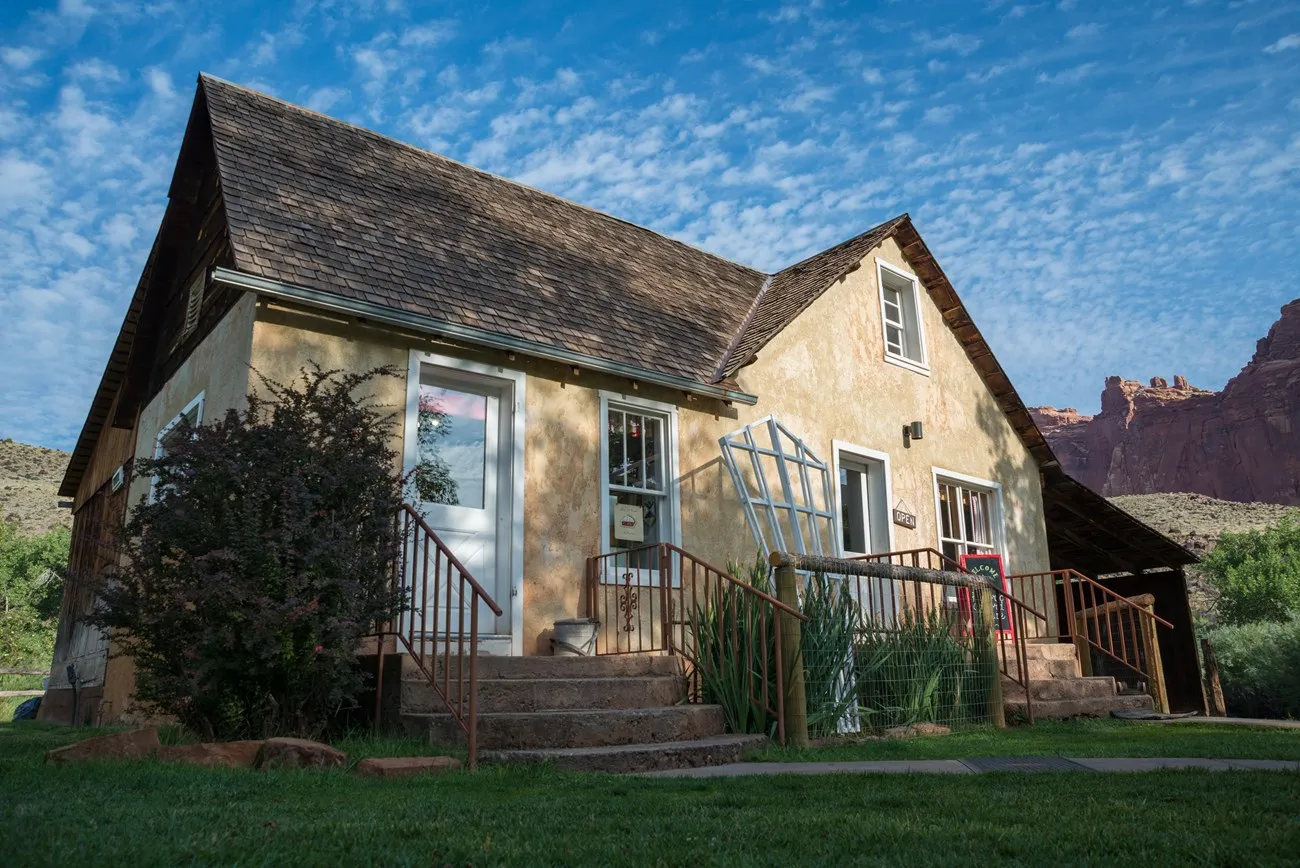
The Gifford Homestead offers a look at life in the small farming community of Fruita. Calvin Pendleton built the original house in 1908, and the Gifford family lived there from 1928 to 1969. Today the farmhouse is interpreted as a historic home, with a barn, garden and other features nearby. The buildings make the valley's agricultural history tangible against its much older cliffs.
The house operates seasonally. As of the park's November 15, 2026 update, its last open day of the season was scheduled for November 22, with reopening planned for March 14, 2027. Hours and plans can change, so check the park before counting on a visit inside. Even when the building is closed, the surrounding district offers an opportunity to appreciate the relationship between the river, farmland and settlement.
4. Visit the orchards with the season in mind
Fruita's orchards are part of the historic landscape, and the possibility of fruit picking gives the park an unusual appeal. Harvests depend on the crop and conditions, not simply the month printed on a travel calendar. The park reported the 2026 harvest finished on November 14, so visitors arriving after that update should plan on enjoying the landscape rather than picking that year.
When fruit is available, enter and pick only where the park has posted an orchard as open, follow its current rules and prices, and don't climb the trees. Leave research markers and equipment undisturbed. The orchards are living historic resources, and a gentle approach helps keep them available for future visitors.
5. Slow down at the petroglyph boardwalks
Long before Fruita's farms, people lived in this area for thousands of years. Along Highway 24, boardwalks provide views of petroglyphs associated with the people archaeologists call the Fremont Culture. Human-like forms, animals and geometric shapes can be difficult to notice at first; binoculars and patience can make the visit more rewarding.
The images are irreplaceable cultural resources. Stay on designated routes, do not touch or mark the rock, and resist inventing a certain meaning for each figure. The National Park Service explains that many interpretations remain uncertain. Consider this a place to observe carefully and learn, rather than a backdrop to climb on.
6. Treat washes and weather with respect
A dry canyon floor can change rapidly during a storm, including rain falling upstream. Before hiking or driving into a narrow wash, ask rangers about the forecast and flash-flood risk. Avoid entering a narrow canyon when storms threaten, and turn back if conditions deteriorate. Rock surfaces, shade, elevation and season can make temperatures feel very different from the valley parking lot.
Bring drinking water, sun protection and sturdy footwear, and choose an outing that fits everyone in your group. Cell service can be unreliable, so download maps and tell someone your plans before heading beyond developed areas. A shorter walk with time to notice the landscape is a better introduction than an overambitious route.
7. Leave room for the unexpected
A practical first day might combine the visitor center, the petroglyph boardwalks, a visit to Fruita and the Scenic Drive, adding a hike only after checking conditions. That schedule allows for food, water and unhurried stops without assuming every dirt spur or seasonal building will be open.
Capitol Reef's appeal is the contrast: orchards below desert cliffs, human stories across many centuries, and a paved route that leads toward far wilder country. Check current park alerts just before departure, and let the open roads and safe weather determine how far you go.