A covered bridge can turn an ordinary crossing into the reason for a Vermont drive. The wooden structures connect riverbanks and communities, but they also reveal different chapters of transportation history: a village road, a former railroad route and a long crossing between two states.
These four bridges are spread across Vermont. They are ideas for separate outings or a longer trip, not a promise of a quick loop. Check road and trail conditions before departure, obey posted weight and clearance limits, and park only where it is safe and legal. These crossings are working infrastructure as well as historic places.
1. Taftsville Covered Bridge: A red landmark near Woodstock
Taftsville Covered Bridge spans the Ottauquechee River near Woodstock. Vermont's tourism office dates the red bridge to 1836, and a Vermont Agency of Transportation report describes it as an early covered bridge built with local wood and stone. Its setting makes it a natural addition to a visit to Woodstock or the surrounding valley.
The bridge is especially appealing because it remains connected to the road network rather than standing as an isolated exhibit. That also means visitors must watch for traffic. Do not stop a vehicle inside the bridge for a photograph or block an entrance; find an appropriate public parking place and view it from a safe location.
Weather and river conditions can change the scene dramatically. Autumn foliage may draw crowds, while winter can bring ice and narrow roadside shoulders. Check local conditions after storms and respect any temporary closure or maintenance signs. A historic crossing is best appreciated when both visitors and residents can use it safely.
2. Cornish-Windsor Covered Bridge: A crossing between states
The Cornish-Windsor Covered Bridge spans the Connecticut River between Windsor, Vermont, and Cornish, New Hampshire. Vermont tourism describes it as the world's longest two-span covered bridge. A state historical survey dates its construction to 1866 and identifies its Town lattice truss design.
Crossing a state line on a timber bridge is part of the fun, but the practical details deserve attention. Look for posted traffic rules, vehicle restrictions and pedestrian guidance at each end. The bridge is a public crossing, so do not assume there is a safe place to stop in the roadway or on an approach.
Windsor can serve as an anchor for a longer Connecticut River Valley visit. Choose a meal or another attraction in advance, verify its hours and leave enough time for the drive. If your route takes you into New Hampshire, remember that road conditions and parking rules can differ on the other side of the river.
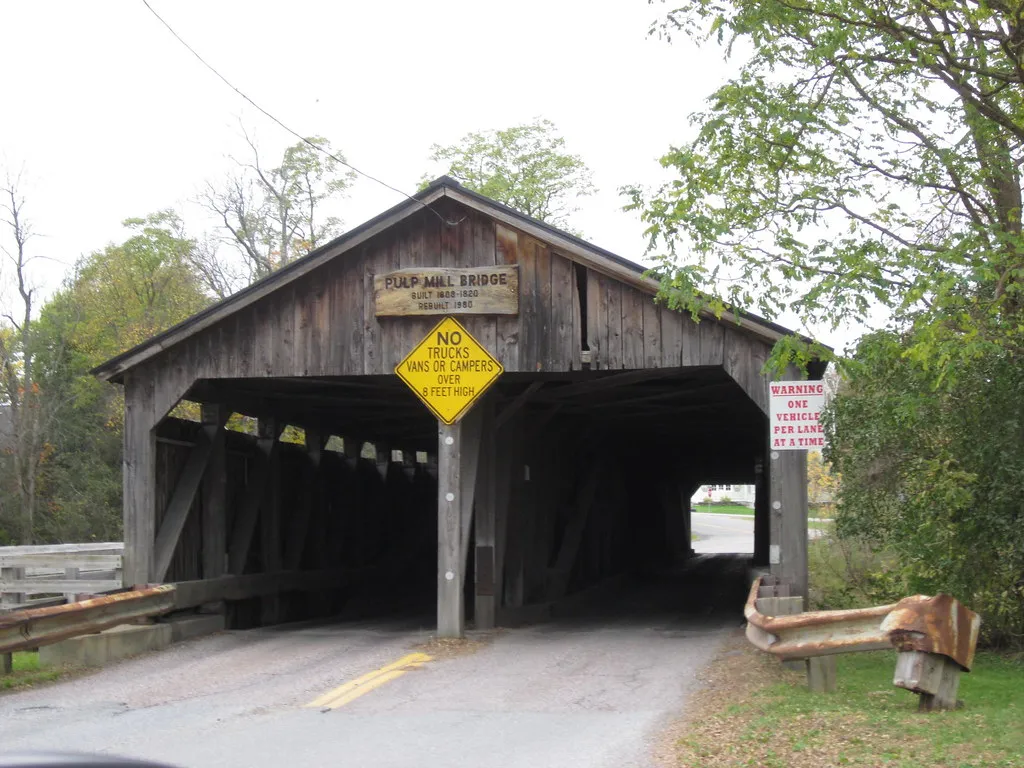
3. Pulp Mill Covered Bridge: A Middlebury-area crossing
The Pulp Mill Covered Bridge crosses Otter Creek in the Middlebury area. Vermont tourism identifies it as one of the state's oldest covered bridges. Its setting offers a reason to explore the Champlain Valley at a different pace, with a stop in Middlebury as part of the day.
Take a moment to notice the relationship between the bridge and the water beneath it. Covered bridges protected timber structures from weather, extending the useful life of the wood; their design also reflects the practical engineering needs of their communities. Avoid treating the crossing as a private photo set: remain clear of vehicles and follow posted signs.
Bridge access can change because of repairs, flooding or weather. Confirm current local information if you are planning a route specifically around a crossing, especially after heavy rain. If a bridge is closed, respect the closure and enjoy it only from areas that remain open to the public.
4. Fisher Covered Bridge: A former railroad crossing on a trail
Fisher Covered Bridge near Wolcott has a different transportation story. Vermont tourism describes it as the last covered railroad bridge in operation in the state, and the state rail-trail authority identifies it as a landmark on the Lamoille Valley Rail Trail. The change from rail crossing to trail feature makes it an intriguing option for walkers and cyclists.
Check the trail manager's latest conditions and rules before setting out. Surface, weather and maintenance can change the character of a trail visit, and an individual access point may have its own parking arrangements. Share the route courteously, keep to open areas and choose a distance appropriate for the people traveling with you.
Because the trail is a recreational route, do not plan to drive a car through Fisher Bridge. Bring water, a map and clothing appropriate for the season. In winter or after storms, verify whether the section and your intended activity are permitted before traveling.
Plan a bridge trip without rushing
For a short outing, pick the bridge nearest your base and pair it with a village walk or meal. For a longer itinerary, group stops geographically and allow time for two-lane roads, seasonal weather and unexpected detours. Taftsville and the Woodstock area, the Connecticut River crossing, Middlebury and Wolcott are distinct destinations rather than stops on one compact route.
Use current maps and official notices, and never rely on an old photograph as evidence that a bridge or parking area is open today. Follow posted load, height and speed limits and give pedestrians and other vehicles room. The pleasure of these crossings lies in their history and their continued connection to Vermont communities; a little patience helps preserve both.