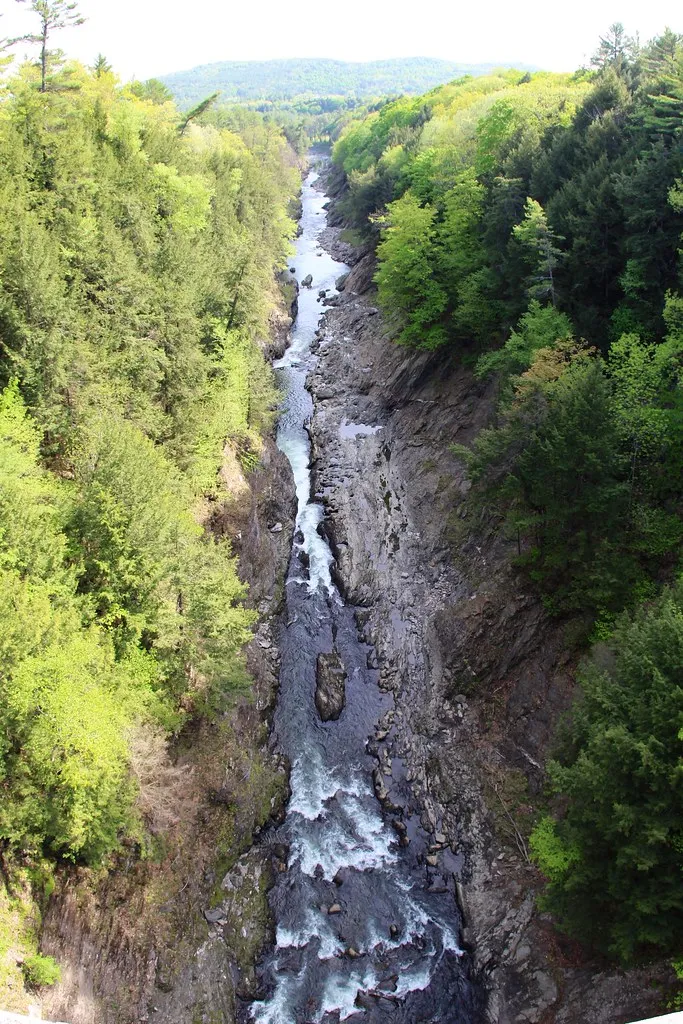
From the Route 4 bridge, Quechee Gorge reveals a dramatic cut in the Vermont landscape and the Ottauquechee River below. The view is a memorable reason to stop, but a visit can include more than a few minutes at the railing: nearby trails offer a different perspective on the gorge and the surrounding woods.
Quechee State Park operates seasonally, and trail conditions change with weather. Decide how much walking your group wants, check current access and give traffic the attention it deserves near the road. A careful plan makes it easier to enjoy both the view and the landscape around it.
1. Begin with the Route 4 view
The bridge carries a public highway across the gorge, putting a striking view close to a major travel route. Use designated pedestrian space, remain behind barriers and watch for traffic when approaching or leaving the bridge. The view is worth a pause; it is not a reason to step into the roadway or climb onto a railing for a photograph.
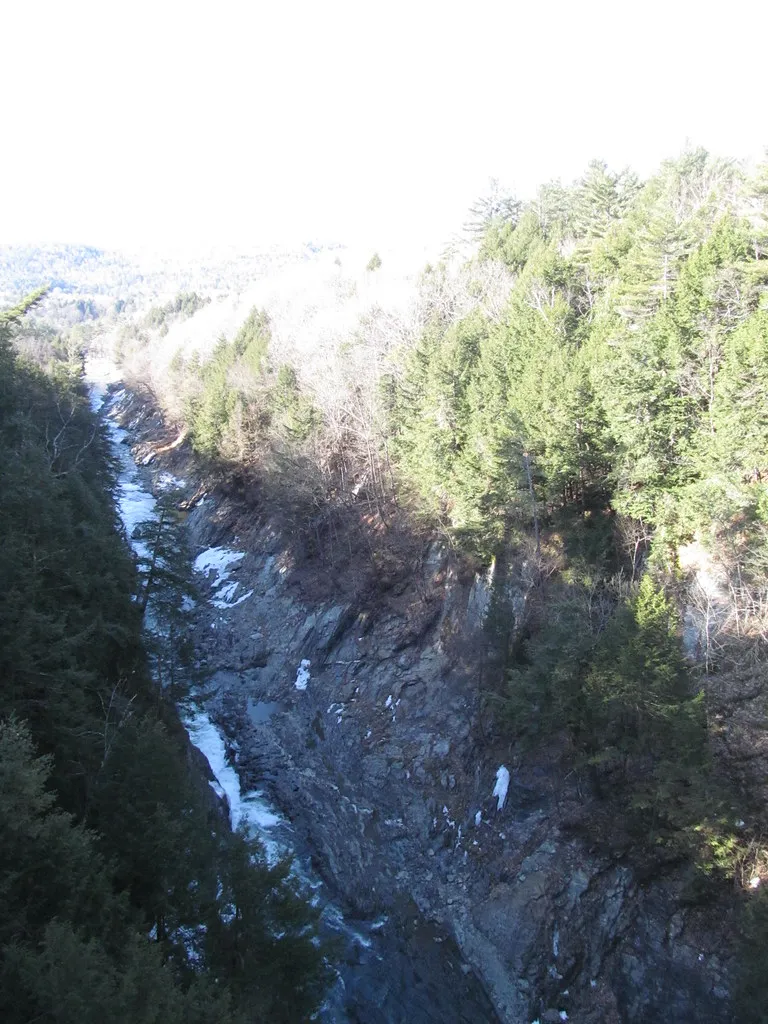
The gorge's appearance changes with season, water level and weather. Autumn color can draw many visitors, while winter brings the possibility of ice and snow on walking surfaces. A cloudy day may be quieter but can still require a warm layer and shoes with good traction.
Park only in a designated, legal space and follow signs. Do not block driveways or create an unsafe roadside stop. Check current local information before traveling after heavy rain, storms or freezing weather, when access and trail conditions may change.
2. Choose a trail that fits your group
Vermont State Parks lists several ways to experience the Quechee Gorge Trail. Its hiking information describes a moderate one-mile round trip from the bridge to the bottom of the gorge, and a longer approximately 1.5-mile round trip from the visitor center to the bottom. Starting points and distances matter, so use the current park map rather than assuming every route is identical.
The walk involves a descent and a return climb. Allow more time than the distance alone might suggest, especially with children or anyone who prefers a slower pace. Roots, mud, loose material, snow or ice can make footing more difficult. Turn around if the surface or weather exceeds your comfort level.
Stay on open, designated paths and away from steep edges. Rocks near moving water may be slippery even when they look dry. Keep children close and do not enter closed areas or attempt to reach an unmarked viewpoint. A safe view from the trail is more valuable than a risky photograph.
3. Consider the Dewey's Pond direction
The state also describes trail options from the bridge or visitor center toward Dewey's Pond. Its guide lists approximately 1.5 miles round trip from the bridge and two miles from the visitor center. These are alternative routes to check on a map, not additional distances that every visitor must complete.
Choose one direction that fits the available daylight, current conditions and your group's abilities. Carry water, dress in layers and tell someone where you are going if your plans include a longer walk. Contact the park for current trail surfaces and accessibility information if you need a specific accommodation.
The river and gorge are changing natural features. After heavy rain, give the water extra space and check for closures or warnings. Leave plants and natural objects in place and carry out trash so the next visitor can enjoy the area too.
4. Plan for the park's seasonal facilities
Quechee State Park's 2026 operating schedule lists May 22 through October 12 for the regular season. As of November 16, that season has ended. Check the current Vermont State Parks information before expecting the campground, contact station, restrooms or other services to be available.
During its operating season, the park offers camping and day-use facilities; fees apply to the designated fee area. Check current reservations, hours and rules directly with the state. The status of a trail or public roadway should not be assumed from the seasonal status of a particular campground or visitor service.
Pets are permitted throughout the park under the state listing, but visitors must clean up after them and follow posted rules. Keep an animal under control around traffic, other walkers and wildlife, and verify any current leash requirements before arrival.
5. Give the Upper Valley outing room to breathe
Quechee's location along Route 4 makes it possible to pair the gorge with a meal or another nearby attraction. Each business and attraction has its own seasonal hours and admission policies. Choose one additional stop and allow time for parking rather than trying to fit a long list into the afternoon.
For a first visit, enjoy the bridge view safely, choose one open trail if conditions are suitable, then take a break before continuing. If winter weather or a closure changes the plan, enjoy the public view only from areas confirmed open and return for a trail walk in a better season.
The contrast between the view from above and the perspective gained on foot is what makes Quechee rewarding. Let the weather, the park's current guidance and your group's comfort determine how much of it you explore.