The rolling land at Booker T. Washington National Monument is a place to think about the distance between a child’s life under slavery and the education he later helped build for others. Washington was born enslaved here in Franklin County, Virginia, in 1856. After emancipation, he pursued an education and became an influential educator and leader of Tuskegee Institute.
The National Park Service preserves part of the former tobacco farm where he spent his first nine years. A visitor center, reconstructed buildings and walking trails make this a manageable trip, but the questions raised here reach well beyond the length of the paths. Here are five ways to give the visit the time and attention it deserves.
1. Start with Washington’s early life
Begin at the visitor center for an introduction to the site and its interpretation. Washington’s mother, Jane, was enslaved and worked as the plantation cook. Washington later described living with his mother, brother and sister in a cabin used both as their home and as the plantation kitchen. The family’s experience makes clear that the landscape was a workplace sustained by forced labor as well as a home.
Ask staff about current exhibits, ranger programs and the best route for your group. Visitor-center hours can differ from the grounds, so check the park’s schedule before traveling. The grounds and restrooms generally have longer daily hours, while buildings and programs can change with staffing, holidays or weather.
2. Walk to the reconstructed kitchen cabin
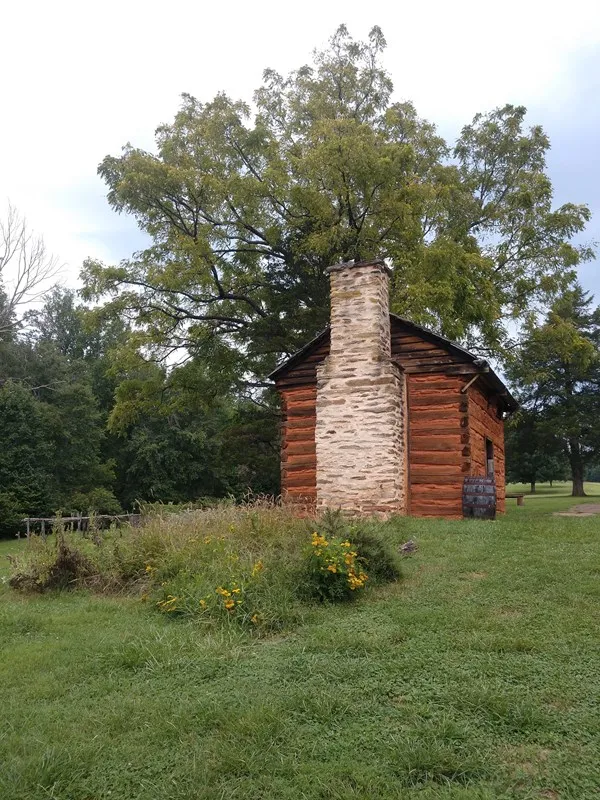
The historic area contains reconstructed plantation buildings, including a kitchen cabin representing the place where Washington lived as a child. It is essential to distinguish reconstruction from an original building: the structure helps visitors interpret the setting, while park exhibits and historical sources explain what is known about the family’s life.
Washington recalled a small cabin with no glass windows and an earthen floor. Interpretation here gives those details a physical setting without making the hardship of slavery abstract or distant. Read the signs slowly, and allow time to reflect before moving on to the other farm buildings.
3. Follow the plantation trail with accessibility in mind
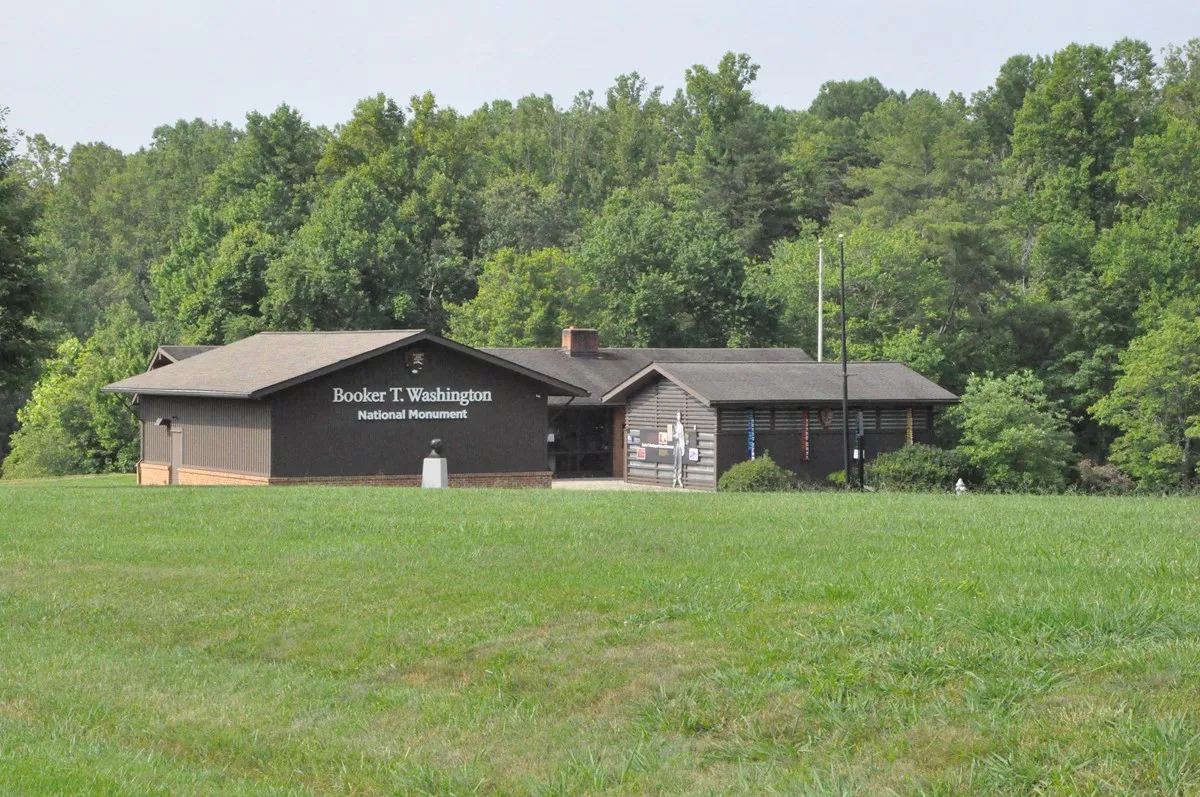
A paved route connects the visitor center with the historic area. The park describes the round trip to the historic area as approximately a quarter mile, with a notable slope near the barn and pens. Some visitors may find that gradient difficult even though the route is mostly paved. The park’s accessibility page gives specific information about the route, restrooms and available wheelchair.
Along the way, look at the farm as a whole: fields, work areas and buildings are connected to the lives of the people who worked them. Seasonal programs may provide additional interpretation, but do not assume demonstrations occur every day. A ranger can help tailor the walk to the time and mobility needs of your party.
4. Add the Jack O’ Lantern Branch Trail
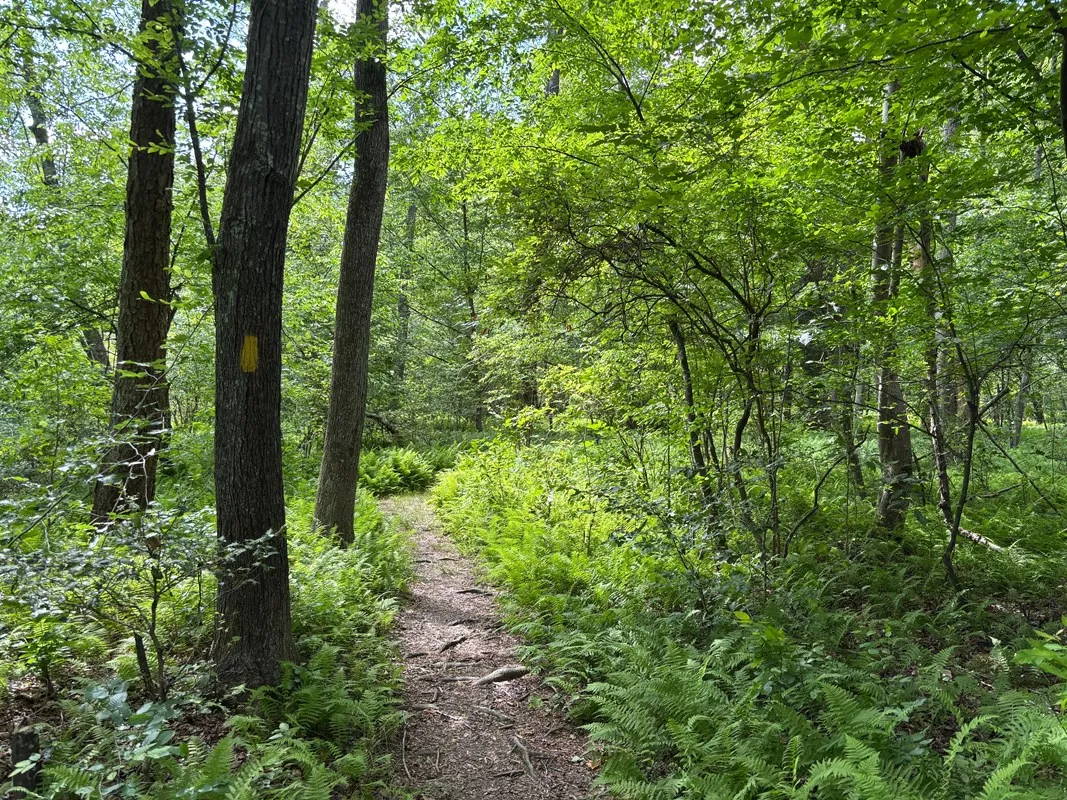
For a longer walk, the park’s nature trail extends from the historic area through woods and fields near Gills Creek. The National Park Service lists it at approximately 1.25 miles, with sections of compacted dirt and gravel and a steep grade in one place. Conditions can change after rain, so suitable shoes and a current trail check matter more than the mileage alone.
The quieter route offers time to take in the Piedmont landscape, but it is not a substitute for the historical interpretation. Consider visiting the exhibits and cabin first; the contrast between the present-day woods and the site’s documented past can make the walk more thoughtful.
5. Trace the journey after emancipation
In 1865, after emancipation, Washington traveled with his family to Malden, West Virginia, where he worked in salt and coal operations and attended school. He later studied at Hampton Institute and became a major figure in education at Tuskegee. His life and ideas are complex, and the park’s timeline provides a useful starting point for learning more.
Plan around current hours rather than assuming the visitor center is open every day. The park’s published schedule lists the center as open Wednesday through Sunday, with holiday exceptions, while the grounds are generally open daily. Verify current alerts and weather before leaving. Pair the visit with time for a meal or a drive through Franklin County, but let this site be the centerpiece: the value lies in understanding both the particular place and the larger history it represents.