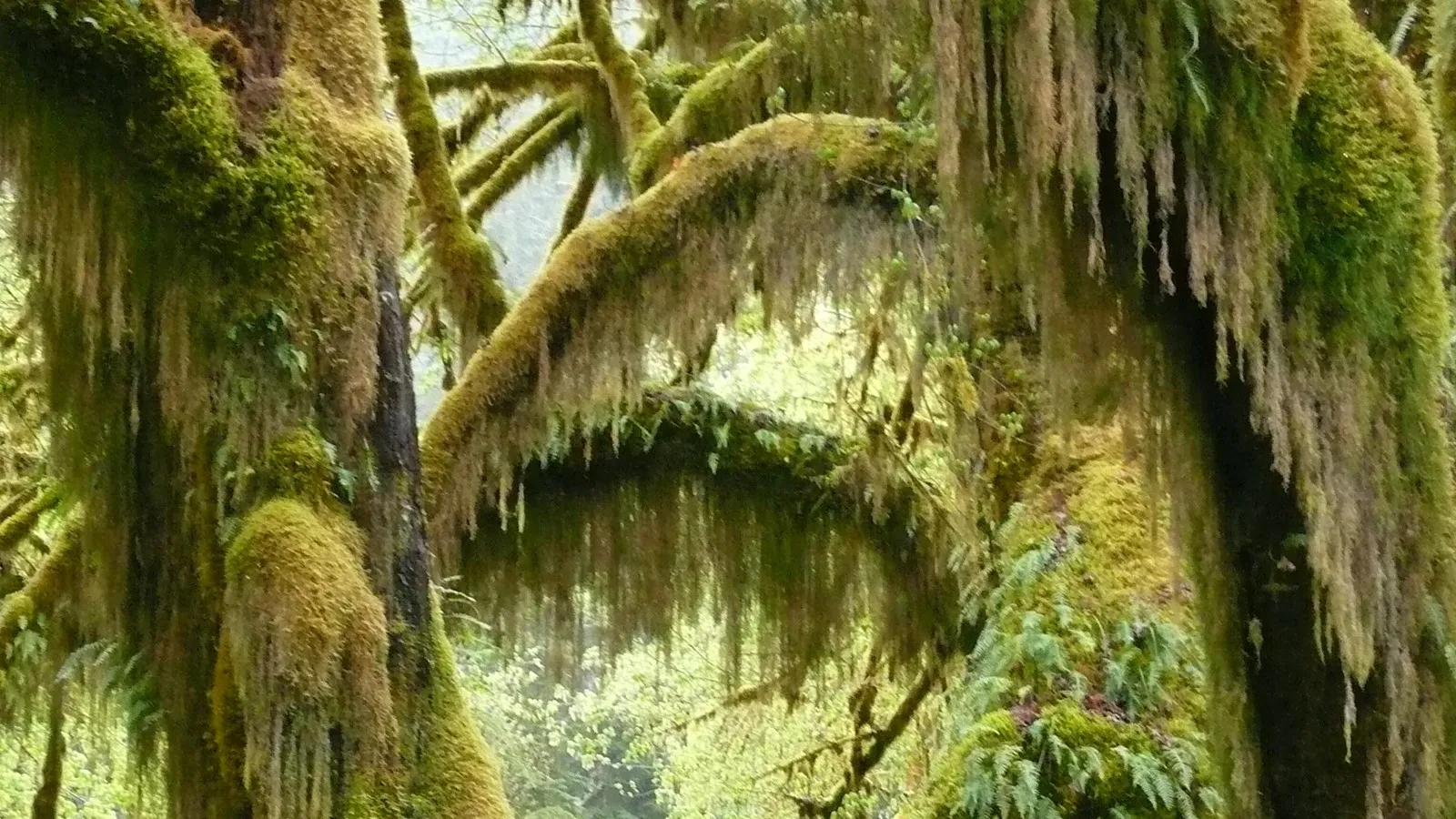
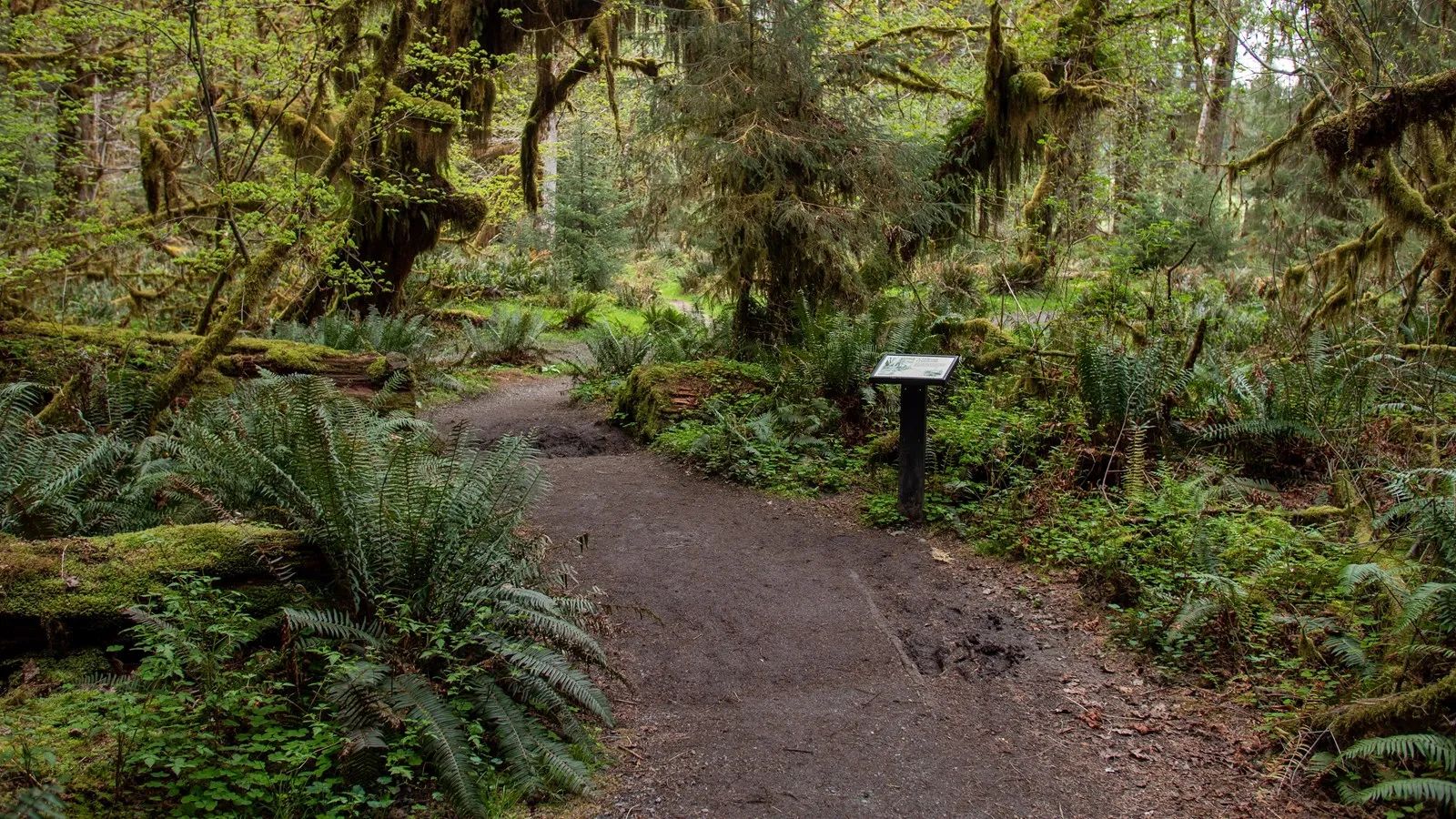
At the Hoh Rain Forest, the first thing many visitors notice is the green. Moss drapes the branches of bigleaf maples, ferns cover the forest floor, and enormous trees rise above a tangle of younger growth. Rain is part of the appeal: this temperate rain forest on Washington's Olympic Peninsula feels most itself when the air is damp and the trail is quiet.
The Hoh is one area of Olympic National Park, and it takes time to reach from other parts of the peninsula. A little preparation helps you spend more of the day among the trees. Here are seven things to know before your first visit.
1. Check road and visitor-center updates
The National Park Service's conditions page is the place to start. As of mid-November 2026, the Hoh area, trails, parking and restrooms are listed as open, while the visitor center is closed for November and is scheduled to open Friday through Sunday beginning December 4. Weather, road work and staffing can change, so verify the latest update immediately before traveling.
Allow for a long drive and bring food, water, fuel and appropriate clothing. The Hoh is not a quick side street from Hurricane Ridge or Lake Crescent. If you are staying elsewhere on the Olympic Peninsula, look at the park's driving-time guide and build a realistic schedule instead of trying to see every region in one day.
2. Walk the Hall of Mosses slowly
The Hall of Mosses is the park's well-known short loop through old-growth forest. The park commonly describes it as 0.8 mile, though its detailed accessibility survey gives a longer total from the parking area. Look for the moss-draped maples and fallen trees that give the trail its distinctive appearance.
Short does not mean flat or step-free. The park documents steep grades, roots, steps and uneven sections, so review its detailed trail description if mobility is a concern. Give yourself time to stop without blocking the path, and use care on damp surfaces. A quiet, unhurried pace is the best way to notice the forest's layers.
3. Follow the Spruce Nature Trail to the river
The Spruce Nature Trail is a roughly 1.2-mile loop that passes through different stages of forest growth and approaches the Hoh River. The park points out nurse logs—fallen trees that provide places for seedlings to grow. In some places a straight row of mature trees reveals where a long-vanished log once lay.
Watch the ground as well as the canopy. This trail also has slopes, steps and narrow sections despite its relatively short distance. The river's pale water comes from the glaciated mountains, but the park warns that swimming and boating on the Hoh River can be extremely dangerous and are not recommended.
4. Consider a shorter accessible option
The park identifies the nearby Mini Trail as a paved, approximately one-tenth-mile loop that may be accessible with assistance. Accessibility needs differ, and conditions change, so consult the park's detailed descriptions or contact staff before relying on any route.
Families or mixed-ability groups do not need to cover every trail. Choose the route that suits everyone, leave time for breaks and enjoy the forest at a comfortable pace. Looking closely at a single nurse log or fern-covered tree can be as rewarding as adding another mile.
5. Treat the Hoh River Trail as an out-and-back
For hikers seeking more distance, the Hoh River Trail continues into the valley. The park lists several possible turnarounds, including first river access about 0.9 mile one way and Mineral Creek Falls about 2.7 miles one way. Double those distances for the return, and add time for stops and conditions.
Longer backcountry trips require more planning. Olympic requires wilderness camping permits in advance; check current trail reports, river crossings, food-storage rules and weather before committing to an overnight. A day hiker should carry water, food, layers, a map and a light, and leave a route and return time with someone outside the group.
6. Respect elk and the forest
Roosevelt elk may be seen in the Hoh area, but sightings are never guaranteed. The park advises staying at least 50 yards from wildlife and specifically warns visitors not to approach elk. Use binoculars or a longer camera lens, and move away if an animal changes its behavior because of you.
Stay on designated trails to protect delicate vegetation and avoid damaging roots. Leave moss, flowers, fallen branches and other natural features where they are. The park does not allow pets on Hoh trails; check the park's pet rules for places where they are permitted, and do not leave an animal unattended in a vehicle.
7. Plan around crowds and rain
Summer parking is limited, and the park warns that entrance waits can be lengthy. Its current guidance suggests arriving before 8 a.m. or after 5 p.m. during busy periods. Confirm daylight hours and conditions before using a late arrival, particularly in winter when days are short.
Bring a rain shell and footwear with traction, even when the forecast looks favorable. Rain gives this landscape much of its character, but wet roots and muddy ground deserve attention. Check entrance fees and pass requirements, carry out everything you bring and leave enough time for the drive back. A simple visit to two short loops can make a full and memorable day when you let the forest set the pace.