The road from Longmire to Paradise offers one of Mount Rainier National Park's classic approaches: old-growth forest, rushing water, historic buildings and, when clouds cooperate, views of the mountain above. The journey is memorable in every season, but the itinerary must change with the weather. Snow can close roads, cover paths and turn a short summer walk into a serious winter outing.
These six stops and planning choices help make a first visit more rewarding. Check the National Park Service's daily road and weather reports before leaving and again before driving above Longmire. Facilities, trail conditions and gate hours can change.
1. Begin at Longmire
Longmire is a useful orientation point inside the park's Nisqually entrance. The historic district, visitor information and nearby walks introduce the park's human and natural history before the road climbs toward Paradise. Check which services are open when you arrive, and use designated parking while consulting a map or waiting for the road gate.
This is also where a winter plan needs a decision point. When the gate is closed for safety, do not treat it as a temporary inconvenience to bypass. Ask about current conditions and choose an available activity that fits your group, or postpone the drive.
2. Watch the winter gate schedule
The park reports that regular nightly closures of the Longmire-to-Paradise gate began for the 2026 winter season. On November 9 the road report listed the route open subject to daily conditions, but the gate can open late, close early or stay closed because of weather, road or avalanche conditions. Check the current alert on the day of travel.
The park's typical conditions-permitting schedule is a 9 a.m. opening, 3 p.m. closure to uphill traffic and 4 p.m. downhill closure; it advises leaving Paradise by 3:30 p.m. Allow a margin and follow the posted instructions rather than treating those times as a promise. All vehicles, including all-wheel and four-wheel drive, must carry tire chains in the park from November 1 through May 1.
3. Stop carefully at Christine Falls
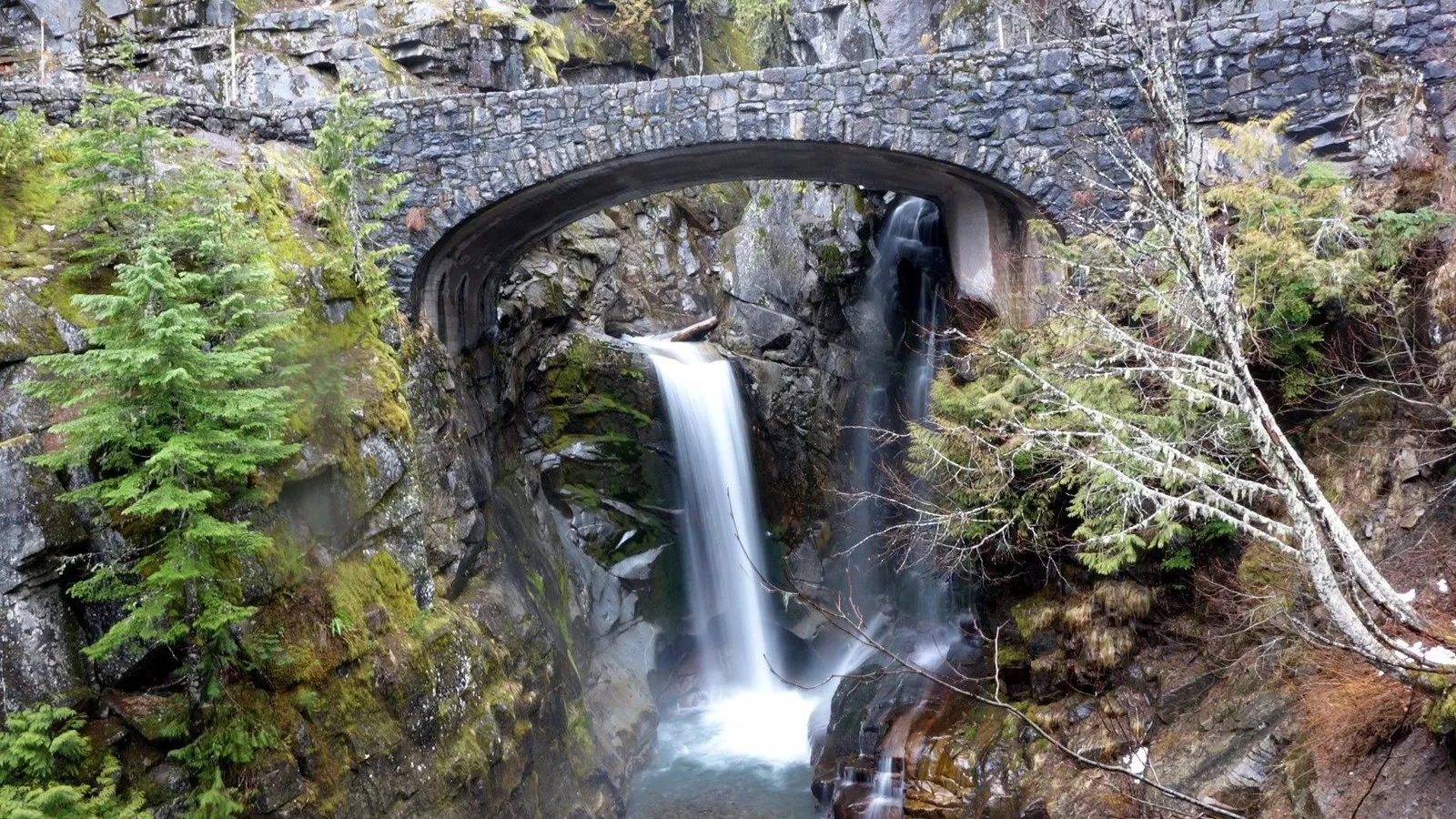
Along the road above Longmire, Christine Falls plunges beneath an arched stone bridge. A short path leads to a lower viewpoint that frames the waterfall and bridge together. The park notes that the bridge is narrow and busy, so use the designated pullouts and watch for vehicles rather than stopping on the roadway.
In winter the path to the lower viewpoint can be snow-covered, icy and hazardous. Conditions may make the viewpoint unsuitable even when the road is open. Enjoy the falls only from a safe, permitted location and be prepared to skip the stop.
4. Get oriented at Paradise
Paradise sits on the mountain's southern side and is known for views, subalpine meadows and winter snow. The Henry M. Jackson Memorial Visitor Center is a useful place to ask about current trails, weather and facilities when it is open. Services are seasonal; the park's late-October 2026 schedule lists limited winter visitor-center hours and says Paradise Inn is closed for the season.
Clouds can hide the mountain, so bring a flexible attitude. Even on a clear day, the upper parking area can be cold or windy. Carry food, water and layers, and check the park's current entrance and parking arrangements before a summer trip, when this area can be very busy.
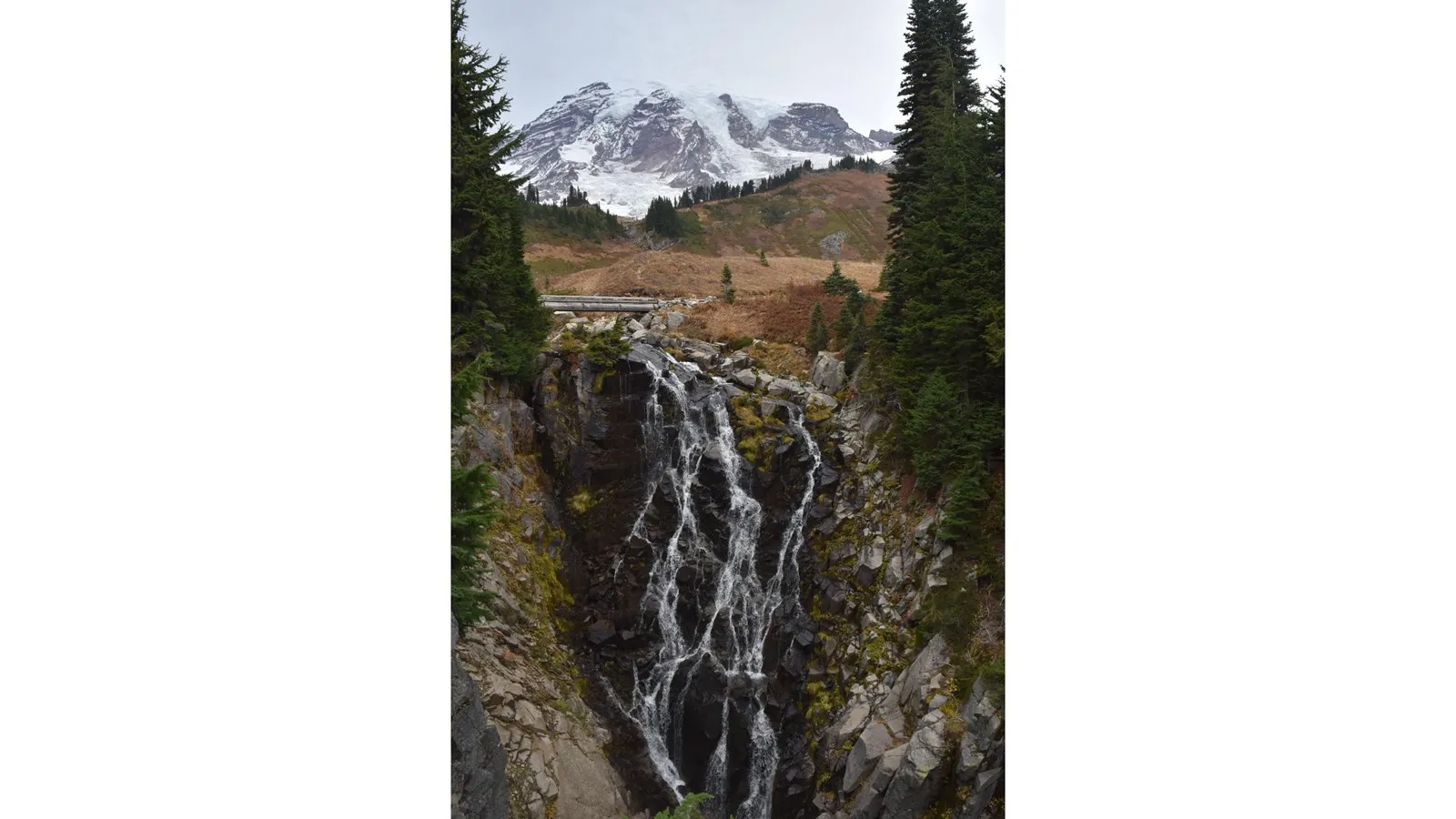
5. Consider Myrtle Falls in suitable conditions
In the warmer season, the park describes a roughly one-mile round trip from Paradise on the Skyline Trail to Myrtle Falls. The waterfall and mountain backdrop make it a popular photographic stop. Stay on the maintained route and protect the fragile meadows by avoiding shortcuts.
Summer distances do not describe winter conditions. Snow can bury trails and persist into early summer; a familiar paved path may become difficult to navigate. Consult the park's latest trail and avalanche information and choose terrain, footwear and equipment appropriate for the day. Turn around when conditions exceed your experience.
6. Leave room for the return
It is tempting to fill every minute at Paradise, but the descent is part of the trip. In winter, leave early enough to pass the Longmire gate before the downhill closure, and expect slower driving in snow, darkness or heavy traffic. Carry emergency supplies, check your fuel and never assume that an open road will remain open all day.
Before any walk, tell someone your plan and expected return time. Keep the group together, carry a map and a light, and be willing to change plans when clouds, wind or fatigue arrive. Pets are restricted on park trails; review the current rules before bringing one.
A day at Mount Rainier does not need a summit hike. A safe walk through Longmire, a waterfall viewed under suitable conditions and a few quiet moments at Paradise can offer a rich introduction to the mountain and the landscapes below it.