Seattle's waterfront and historic neighborhoods make a rewarding introduction to the city without requiring a rigid itinerary. Start with a public market, follow the water for a while and leave time for museums that tell stories of migration, work and community. The route can be adapted to a rainy day, a leisurely afternoon or a first visit with the whole family.
These five stops are spread across downtown and nearby neighborhoods. They can be combined using public transit, but they do not have to be covered in a single walk. Check opening days and accessibility information for each attraction, and allow extra time for hills, traffic and the weather.
1. Start at Pike Place Market
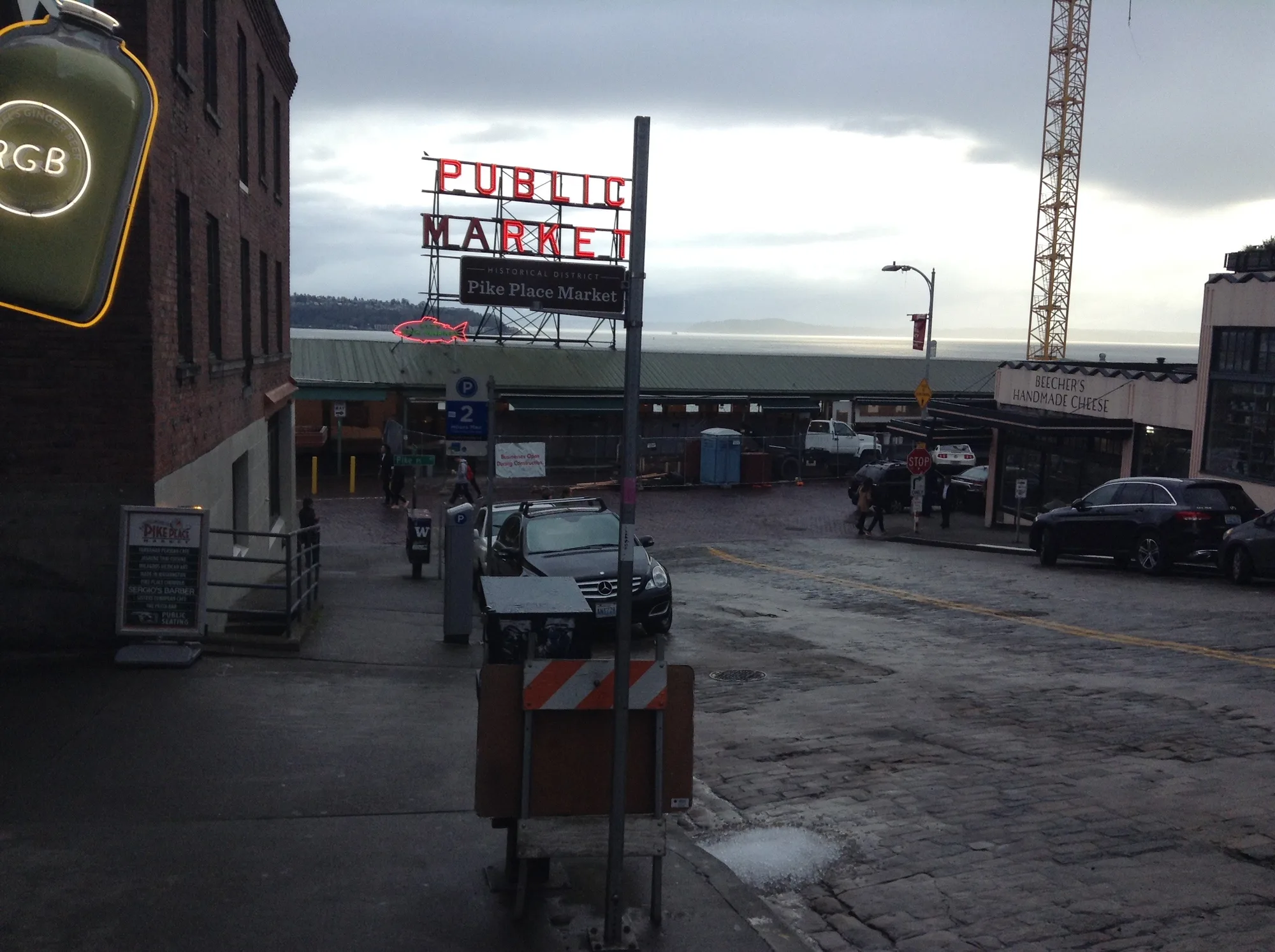
Pike Place Market opened in 1907 and remains a working public market with farmers, craftspeople, food businesses and residents. The familiar sign is a good landmark, but the experience is in the passages, stalls and conversations beyond it. Take a slow look at the produce, flowers and locally made goods rather than treating the market solely as a photo stop.
The market says it is open seven days a week except Thanksgiving and Christmas, while individual business hours vary. Earlier or later in the day may feel less crowded than the busiest midday period. Be considerate of vendors and other shoppers, and ask before photographing people or merchandise up close. The market acknowledges the Coast Salish Nations, including the Duwamish and Suquamish Tribes, whose connection to this land predates the market.
2. Follow the downtown waterfront
Seattle's Waterfront Park includes public spaces along the shoreline and a promenade connecting areas from Pioneer Square toward Pier 62. It is a place to watch ferries and harbor activity, take a break from downtown streets and see the relationship between the city and the water that shaped it.
Choose a section that fits your available time rather than assuming the entire waterfront is a short detour. Look for marked crossings and current construction or event notices, and bring a layer for wind off the bay. Benches and viewpoints make it easy to pause without a ticket, while nearby attractions may have their own admission and hours.
3. Explore Pioneer Square
Pioneer Square is one of Seattle's historic districts, with brick buildings, public spaces and businesses that connect the neighborhood's past with its present. Slow down to notice details above street level, then stop for a meal or browse a local shop. This remains a living neighborhood, so be respectful of residents, workers and other visitors.
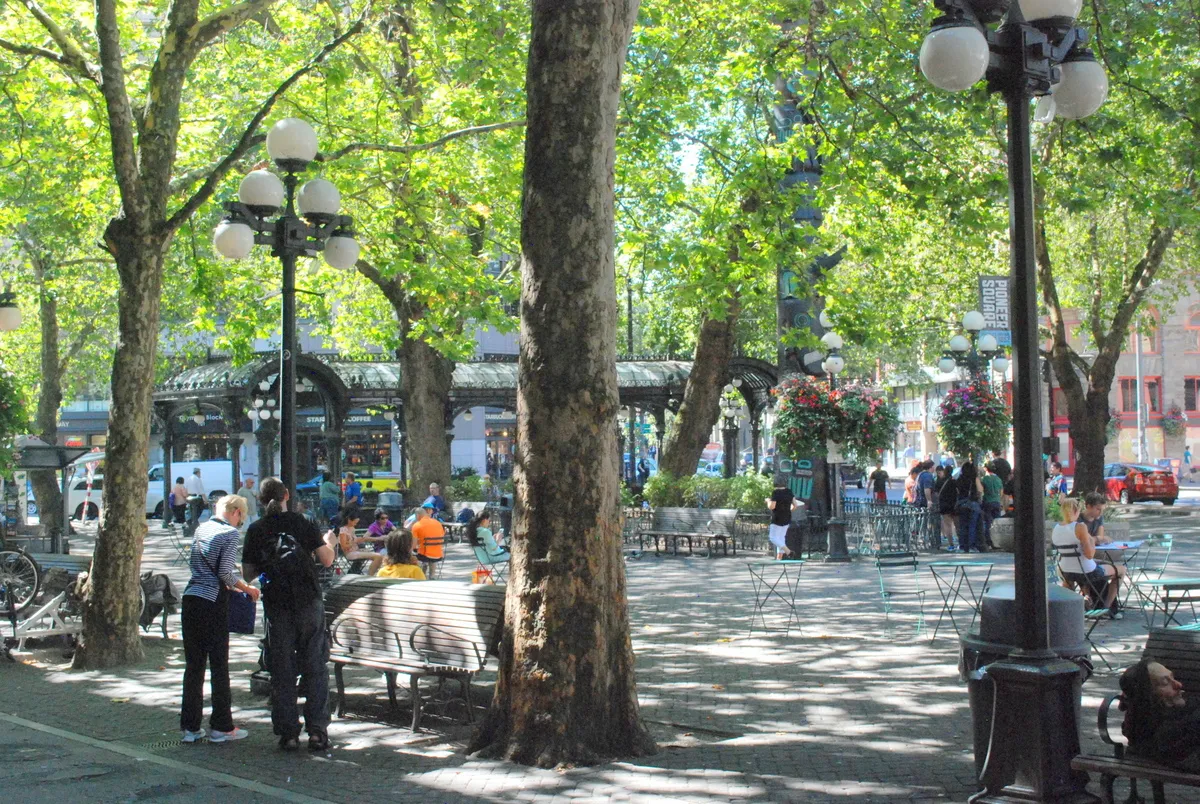
For a deeper introduction, the National Park Service offers a self-guided walking tour of the area. Use a current map and choose a route suited to your group; sidewalks, crossings and grades vary. The photograph below shows Pioneer Place, one of the district's public gathering spaces.
4. Visit the Klondike Gold Rush visitor center
In the former Cadillac Hotel at Second Avenue South and South Jackson Street, the Seattle unit of Klondike Gold Rush National Historical Park explores the city's role in the rush north. Exhibits and films give visitors a chance to consider both the hopes of people who traveled and the businesses and transportation networks that supported the journey.
The National Park Service lists the site as free to enter. Hours and programs can change; its current basic-information page lists Wednesday through Sunday hours, while an older program page gives a different schedule. Check the current visitor-center listing before setting out, especially around holidays.
5. Discover the Chinatown–International District
Seattle's Chinatown–International District holds the living histories of Asian American and Pacific Islander communities. The Wing Luke Museum, at 719 South King Street, focuses on culture, art and history and offers exhibits as well as selected neighborhood and historic-building tours. The museum identifies Chinatown, Japantown and Little Saigon among the neighborhood's connected communities.
Check current museum and tour times and reserve ahead when appropriate. Leave room to visit neighborhood businesses, but avoid treating the district as a backdrop: it is a place where people live and work. The museum's own materials are a helpful starting point for understanding the stories behind the streets.
Add an outdoor art stop
If you have more time, the Seattle Art Museum's Olympic Sculpture Park is a separate waterfront destination north of the market. Its outdoor sculptures and paths overlook the Salish Sea; the museum says the park itself is free and open daily, with hours tied to sunrise and sunset. Indoor pavilion hours and programs differ, so verify them separately.
A comfortable day might pair Pike Place Market with the waterfront and one museum, saving the remaining neighborhoods for another visit. Public transportation can reduce parking and navigation time. Bring rain protection, check current schedules and give each place enough time to be more than a name crossed off a list.