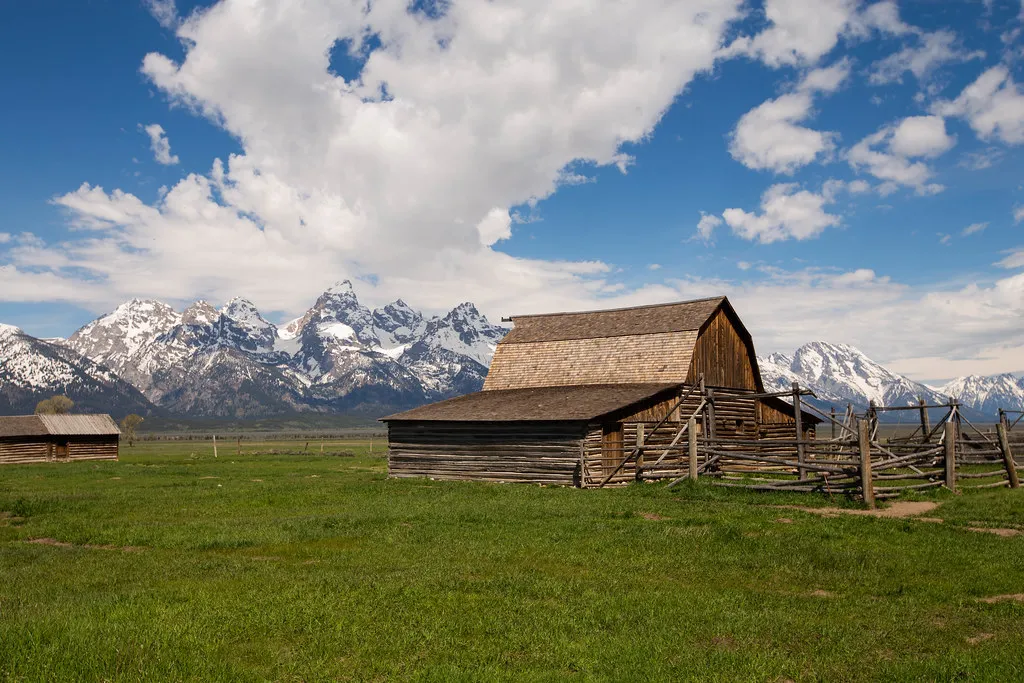
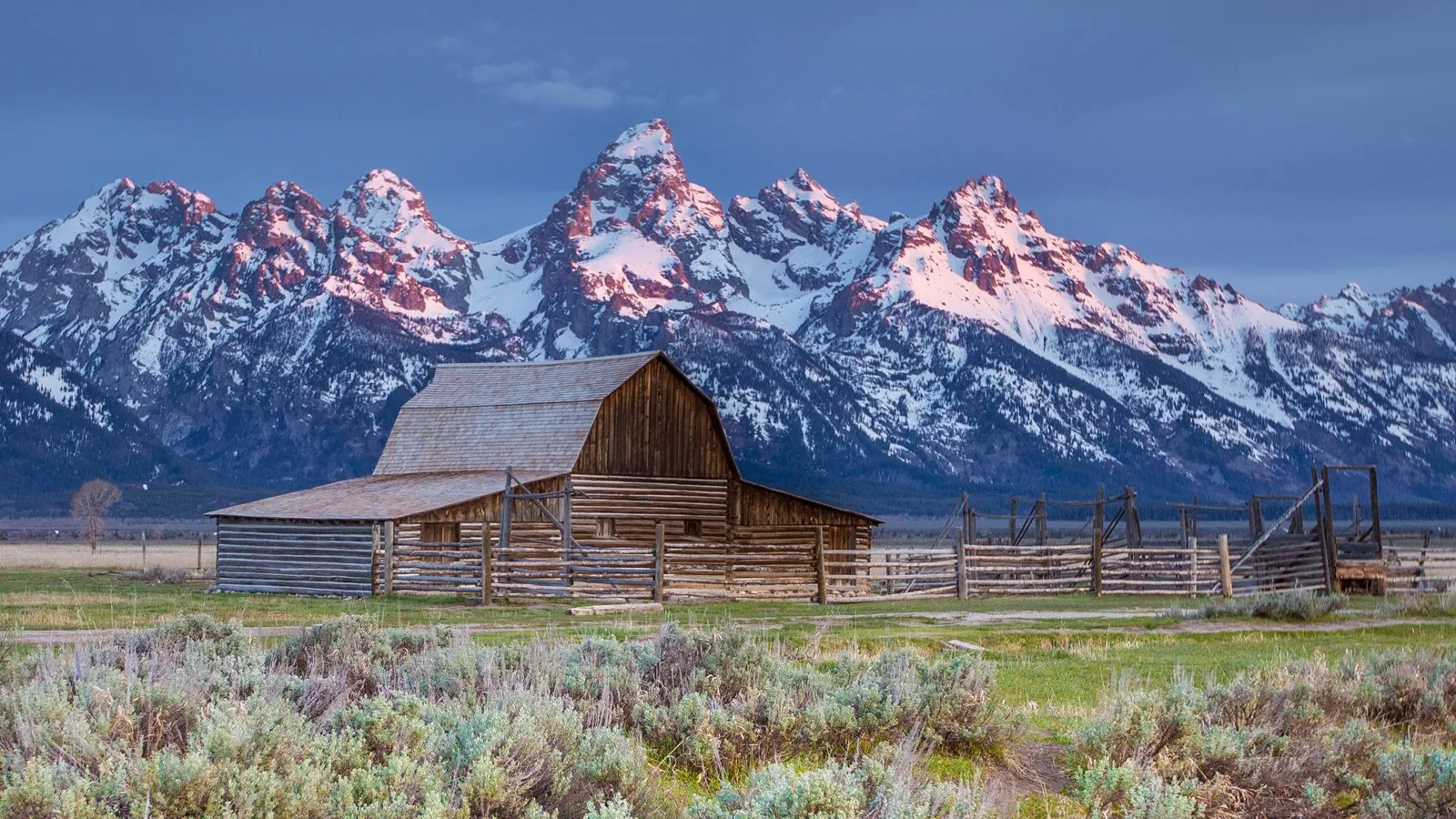
Against the Teton Range, the historic barns of Mormon Row have become familiar images of Jackson Hole. But the buildings are more than a scenic foreground. They are remnants of a farming community whose residents built homes, irrigation systems and shared institutions in a demanding landscape.
Mormon Row is part of Grand Teton National Park. A good visit combines the view with attention to the history, wildlife and current access conditions. As of November 2026, construction and winter parking restrictions make advance planning especially important.
1. Check access before setting out
The National Park Service's November 2026 conditions page lists the historic district open, with access to some buildings closed during construction. Its parking information separately lists the Mormon Row parking lot closed for the winter season from November 1 through April 30. These details describe different parts of a visit: an open district does not guarantee that the usual parking area or every building is accessible.
Road and weather conditions can change. The park says vehicle access to the district is restricted once snow arrives and until it melts in late spring. Check the current road and parking status and speak with a ranger about safe access before traveling, rather than assuming a summer driving route works in winter.
If conditions permit a visit, park only where the park allows and do not block roads or gates. Construction may bring equipment, noise and localized closures. Follow signs and staff directions, and give work crews and other visitors space.
2. Look beyond the famous photograph
The National Park Service explains that the community, originally known as Grovont, developed in the 1890s as members of the Church of Jesus Christ of Latter-day Saints homesteaded east of Blacktail Butte. Families built ranches and homes as well as a church and school. The surviving structures represent a community, not just a collection of isolated barns.
The Homestead Act offered land under specified conditions, including building and cultivating a claim. That history also belongs within the longer story of Indigenous homelands and the dispossession and policies that enabled U.S. settlement. Seek out the park's interpretation and Indigenous perspectives as you learn about the valley.
Take time to notice fences, corrals and the open landscape as well as the buildings. These details can suggest how families worked together and adapted to a short growing season and cold winters. Stay in areas open to the public and leave historic materials where they are.
3. Distinguish the Moulton barns
The John and Bartha Moulton Barn and the T.A. Moulton Barn are separate historic structures. The National Park Service says John Moulton and his brother Thomas Alva homesteaded on Mormon Row in 1908. John initially dry-farmed grain, later moving into dairy farming after irrigation reached the area in the late 1920s.
That practical history adds depth to the familiar mountain backdrop. A barn was a working building connected to animals, crops and a household's livelihood. The park preserves the remaining structures so visitors can consider those lives as well as the dramatic setting.
Access to individual buildings can be restricted for preservation or construction. Do not enter a closed structure or climb on fences for a photograph. Use the park's current information to identify open viewpoints, and share them courteously with others.
4. Photograph the landscape with care
Mormon Row can be busy around sunrise and other popular times. Give other visitors room and remember that public access is shared. A patient photograph from an open, safe location is better than crossing a barrier or stopping a vehicle where it obstructs the road.
The park notes that non-native seeds can cling to shoes and clothing in this area. Brush them off before visiting other park sites to help limit their spread. Stay on designated routes, leave plants and historic objects undisturbed and carry out trash.
Wildlife also uses the surrounding flats. Grand Teton directs visitors to stay at least 100 yards from bears and wolves and 25 yards from other wildlife. If an animal approaches, move away and give it a clear path. Use a long lens or binoculars rather than approaching for a closer view.
5. Build a realistic Grand Teton day
In the regular driving season, Mormon Row can be paired with another open park viewpoint or a stop in the Jackson area. Check road status, construction notices and facility hours for each stop, and allow time for traffic and weather. Winter changes the options substantially, so consult a ranger before planning a non-motorized approach.
Bring water, layers and footwear suited to the surface. Snow, mud and wind can make a short walk more demanding than expected, and cell service may be limited. Ask about current accessibility options if your group needs a particular route or parking arrangement.
Mormon Row rewards a visit that makes room for both the view and the people whose work shaped the place. Confirm access first, then take the time to read the landscape as more than a backdrop.