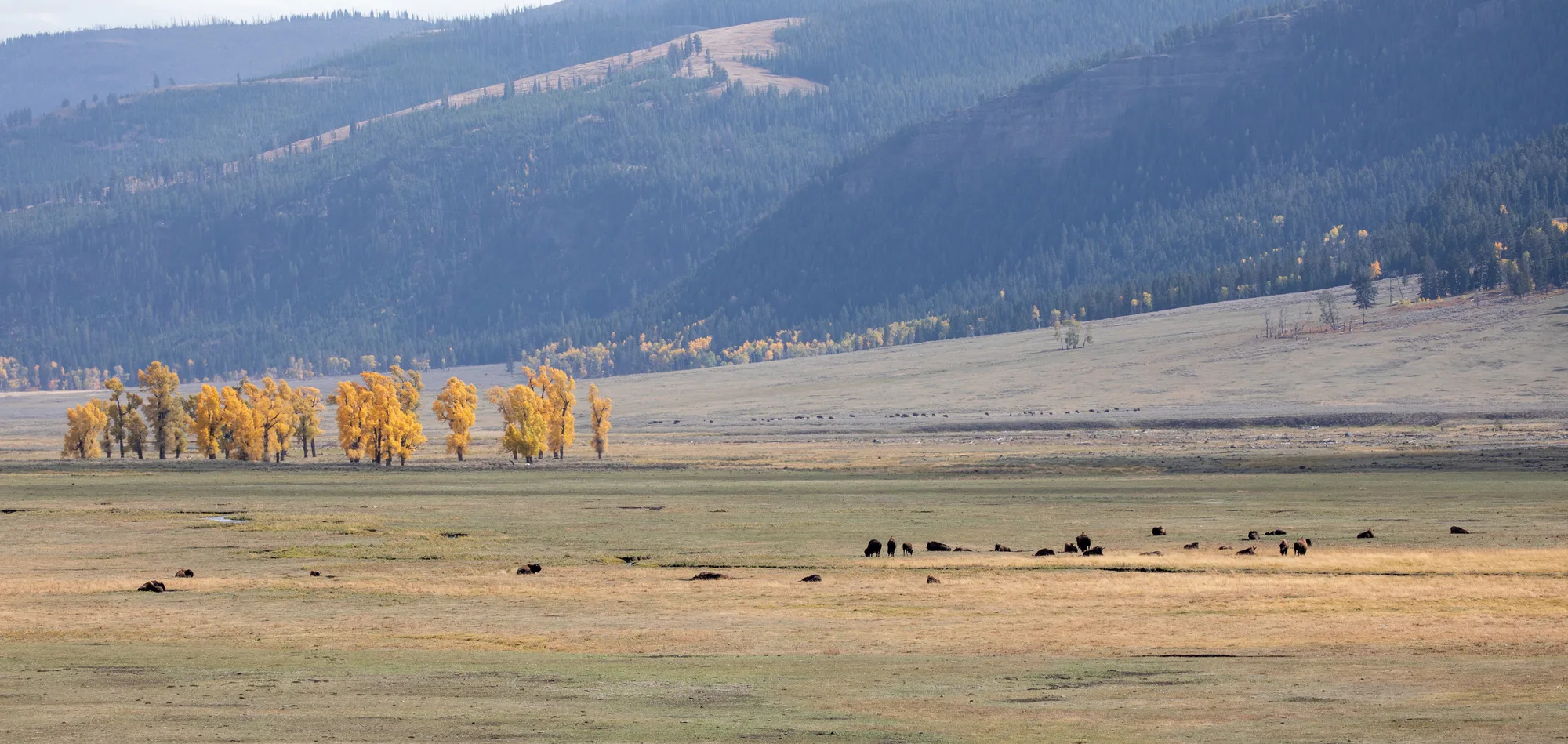
Yellowstone's Lamar Valley offers broad views and the possibility of seeing wildlife in a landscape where the animals set the schedule. Bison, wolves and other species can be present, but no sighting is guaranteed. The best day begins with binoculars, patience and a plan for viewing from a safe distance.
The valley lies along Yellowstone's northern road corridor. That makes it a different winter proposition from destinations reached by the park's seasonally closed interior roads. Weather can still close or restrict the route, so consult current National Park Service road information before leaving.
1. Understand the northern road
The park says the road connecting the North Entrance at Gardiner, Montana, and the Northeast Entrance near Cooke City and Silver Gate remains open to regular vehicles year-round, weather permitting. It passes through Mammoth Hot Springs, Tower Junction and Lamar Valley. Most other Yellowstone roads close to ordinary vehicles in winter.
Open year-round does not mean guaranteed open every hour. Snow, ice, wildlife and temporary restrictions can change travel plans. Check the park's current road status, forecast and alerts before departure, and carry fuel, warm clothing, food and other supplies appropriate for a delayed winter drive.
Remember that the entrance communities and the park's roads cross state boundaries. Check your complete route rather than assuming every connecting highway is open. The park notes that a section east of Cooke City is closed to wheeled vehicles in winter; use official road information when planning onward travel.
2. Use pullouts and keep the road clear
Wildlife can appear near the road, but a sudden stop in a travel lane can endanger visitors and animals. Use a designated pullout that accommodates your vehicle, park fully out of the road and obey ranger instructions. Do not stand in the roadway or block traffic while watching an animal.
Binoculars or a spotting scope can turn a distant movement into a rewarding sight without requiring anyone to approach. A long lens is useful for photographs. Keep a flexible schedule: traffic can slow around wildlife, and an animal may move out of sight before you find a safe place to stop.
In winter, pullouts may be icy or unavailable after storms. Wear footwear suited to the surface and stay alert to snowplows and other vehicles. If there is no safe legal stopping place, continue until one is available rather than forcing a view.
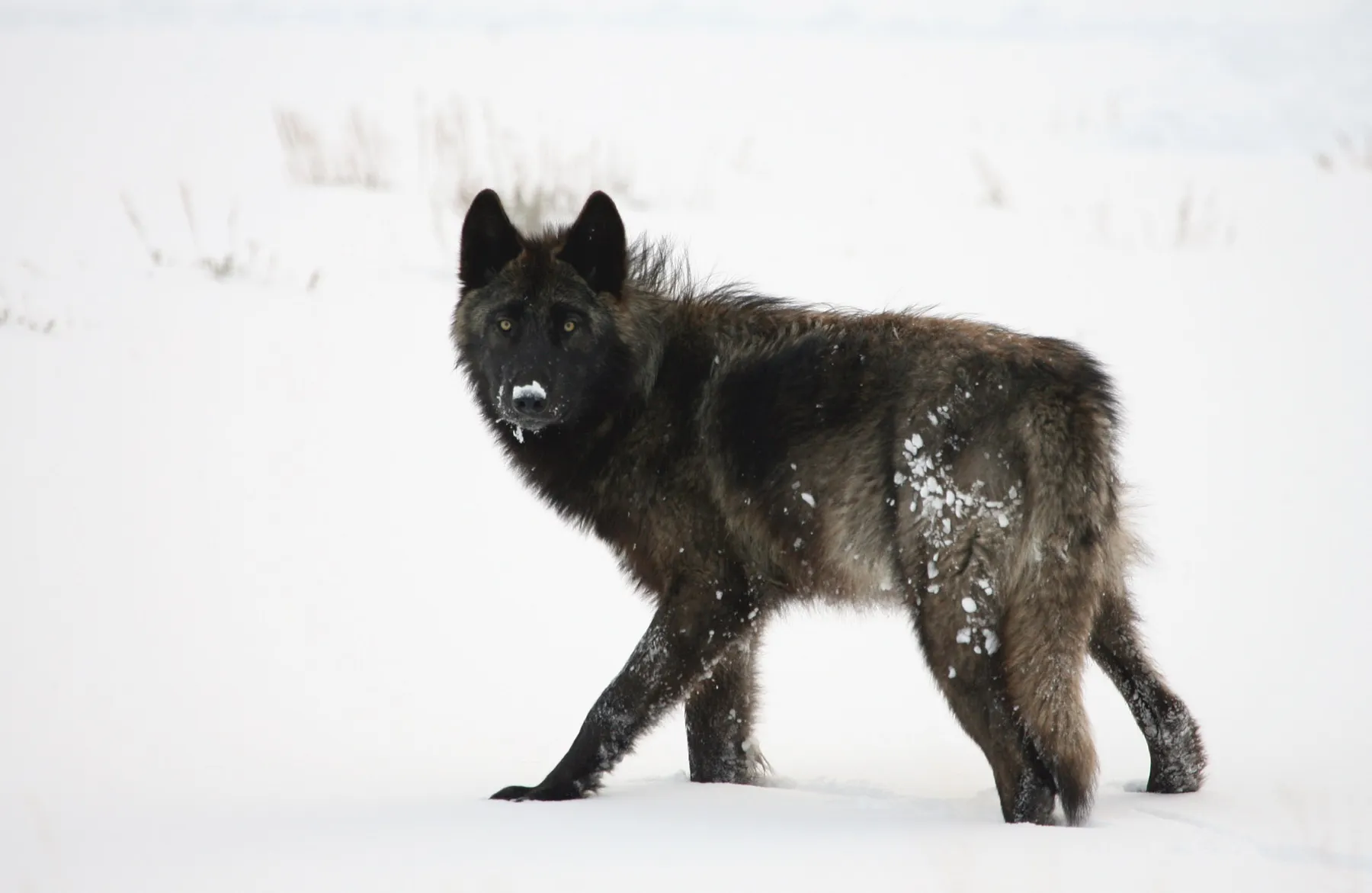
3. Give every animal space
Yellowstone directs visitors to stay at least 100 yards from bears and wolves and at least 25 yards from other wildlife, including bison and elk. If an animal approaches, move away and give it a clear path. These are minimum distances, not a guarantee that every animal will be comfortable at that range.
Bison may appear slow while grazing, but they are wild and can move quickly. Never surround, feed or follow an animal, and do not position yourself between an animal and its route of travel. Keep food secured and follow the park's current wildlife rules.
Wolves are often viewed from a considerable distance, and a sighting can require time and good optics. Listen to rangers and experienced wildlife watchers, but do not assume that a crowd or a stopped vehicle makes a location safe. The experience is better for everyone when animals can continue their normal behavior.
4. Plan around light, weather and limited services
Early and late parts of the day can be attractive for wildlife watching, but winter daylight is short and temperatures can be severe. Check the forecast, dress in layers and allow enough time to reach your lodging or next destination safely. A warm vehicle and a thermos are not substitutes for emergency preparation if a road closes.
Services in Yellowstone and nearby communities vary by season. Confirm fuel, food, lodging and restroom availability before setting out, especially in the transition between fall and winter operations. Cell service may be limited; download maps and current information while you have a connection.
If weather deteriorates or visibility falls, shorten the outing. Lamar Valley's broad landscape is compelling even without a particular animal in view, and there is no need to push beyond your comfort level to make the trip worthwhile.
5. Add context without overloading the day
The northern road also passes other Yellowstone areas, but distances and winter conditions make a long checklist impractical. Choose a small number of open stops, leave time for traffic and verify each facility's operating status. Old Faithful and much of the park's interior require different winter access arrangements; they are not ordinary car stops on the northern road.
Before leaving, review the park's current wildlife, road and weather information. A successful Lamar Valley visit is one where you can observe from a safe place, respect the animals and return with time to spare. The landscape may surprise you, but the safety plan should not depend on surprise.